
Last updated September 10, 2026
Full 25-point door and opener safety check with every visit - springs, cables, rollers, tracks, and your LiftMaster or Chamberlain opener included
You get a price before we start. It does not change when the truck arrives.
 Before
 After
After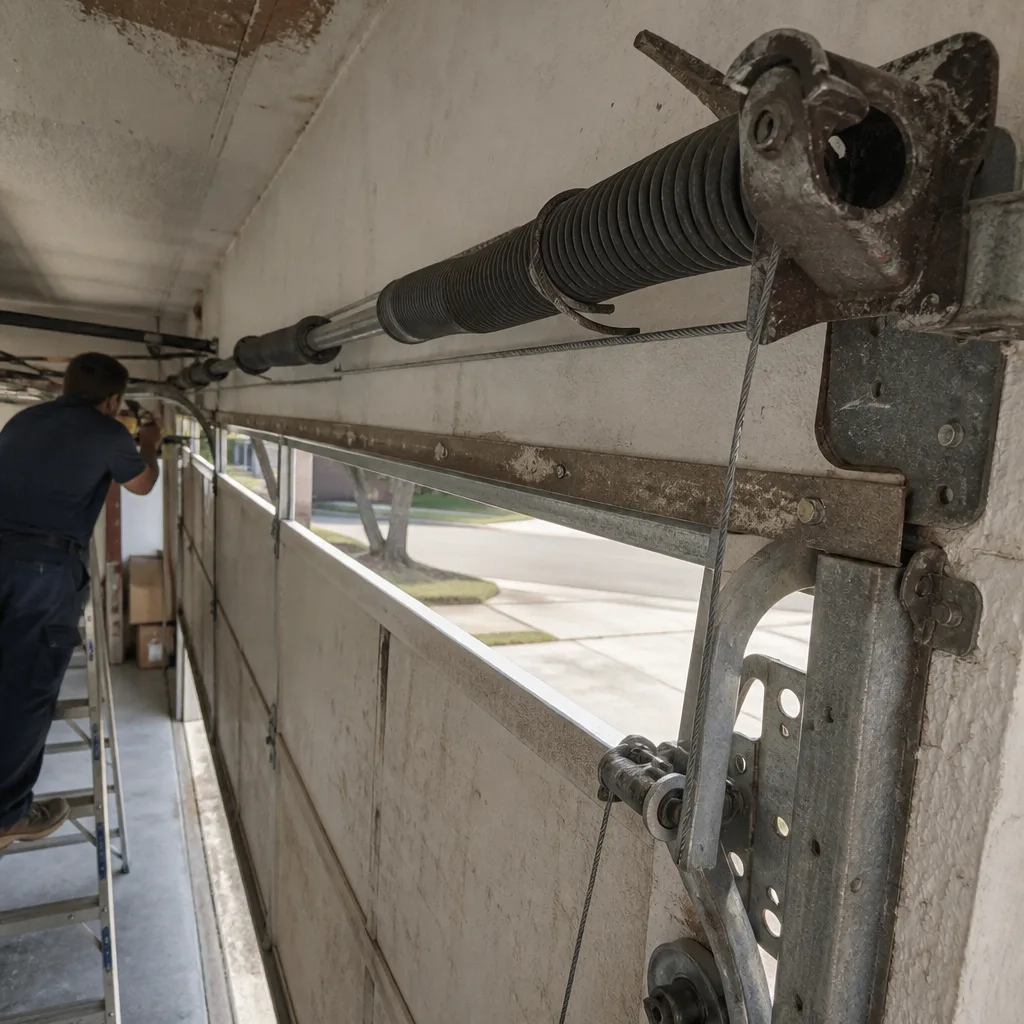 Before
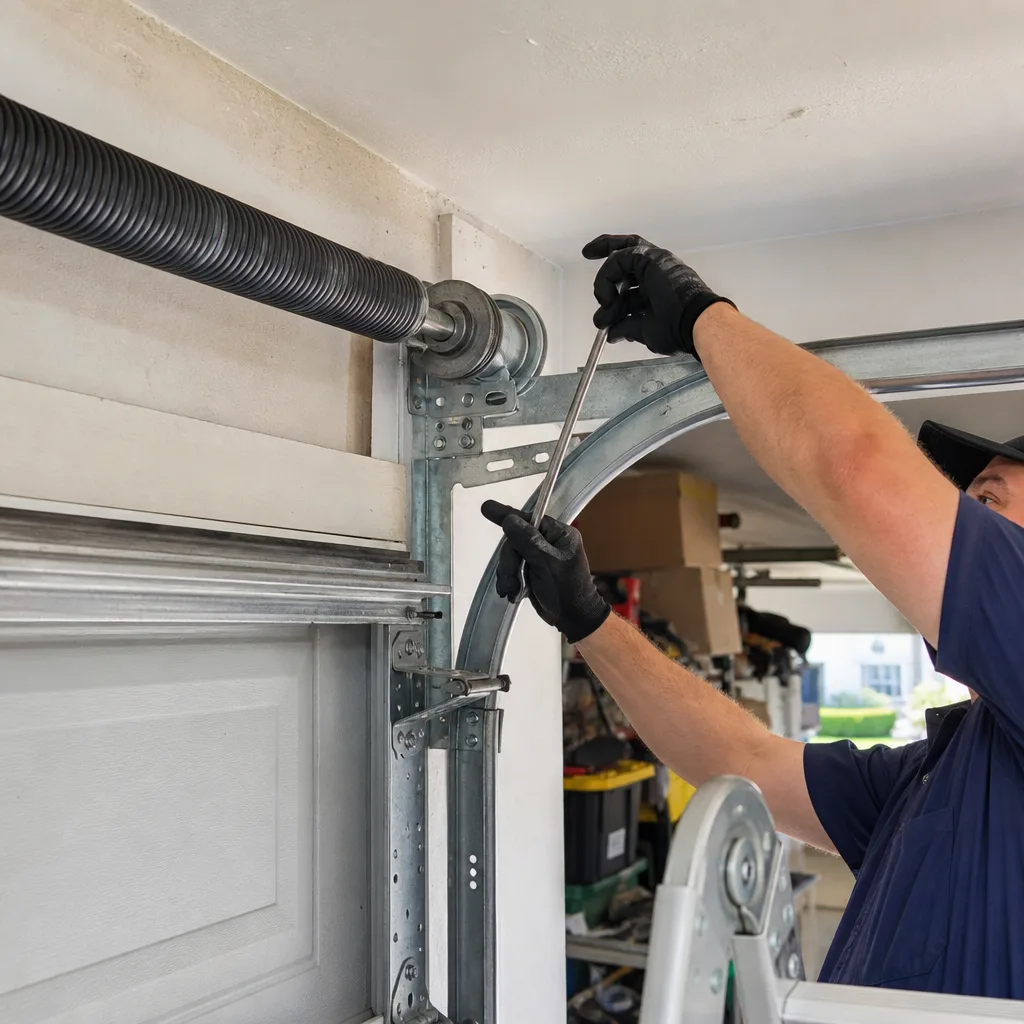 After
After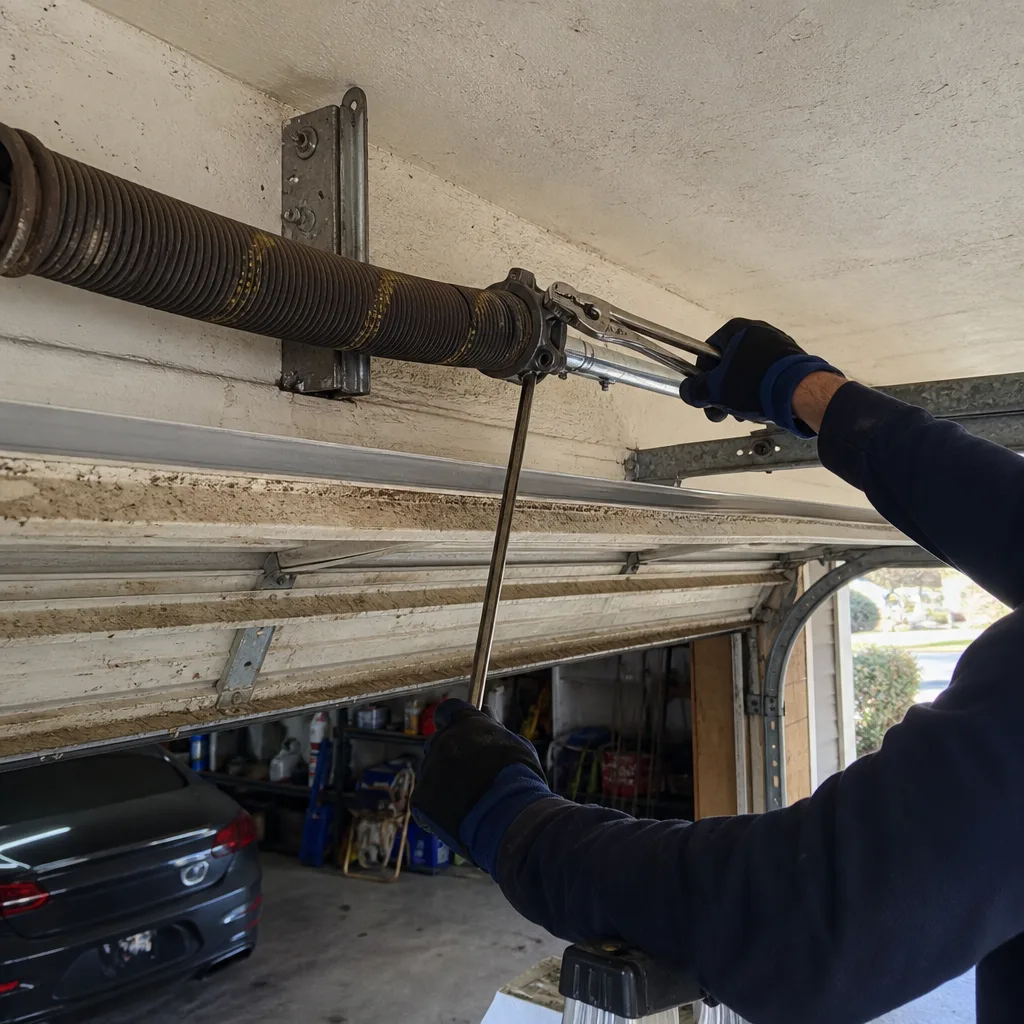 Before
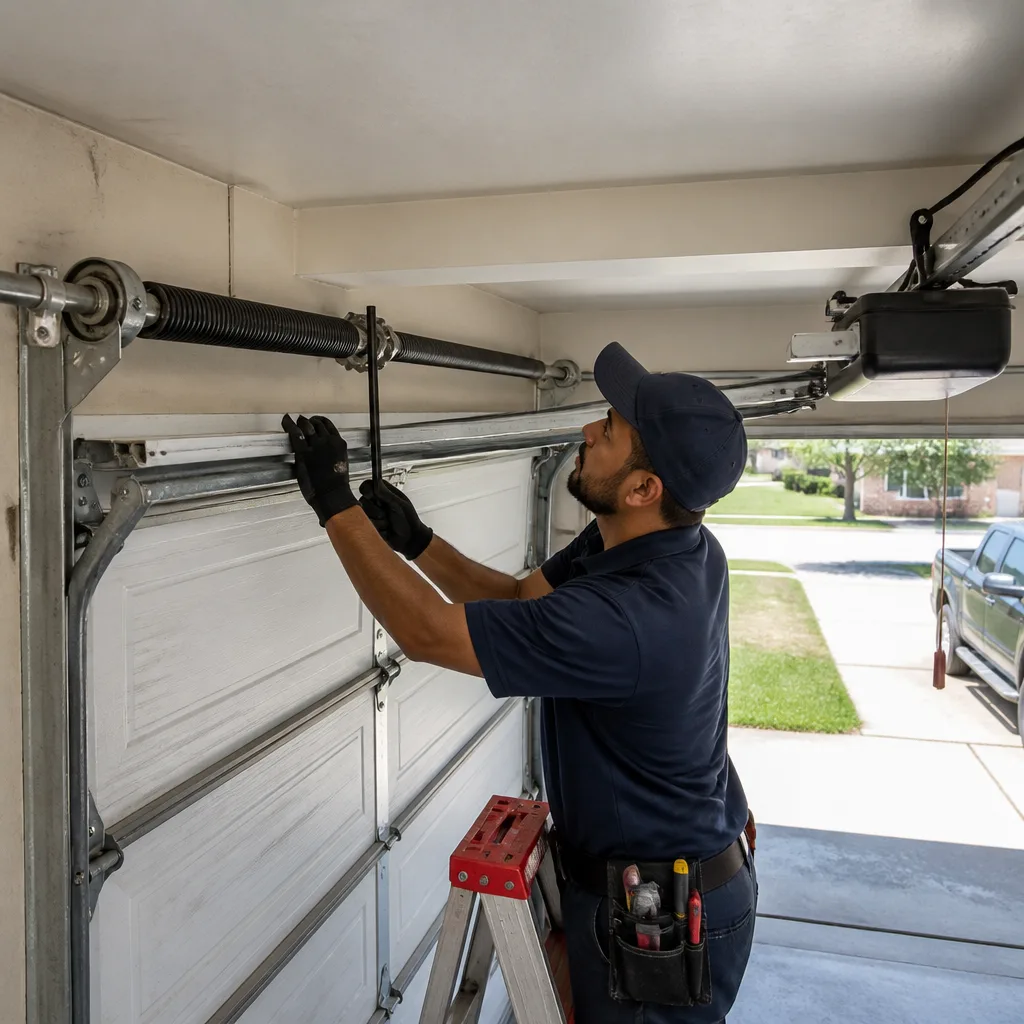 After
AfterGarage Door Repair Maintenance Checklist for Grand Prairie Homeowners
The three repairs Grand Prairie homeowners call about most often in July are all preventable with a 20-minute check in April. Most people skip it because no one told them what to look for. In our 42 years serving this market, we’ve learned that North Texas heat does not break garage doors gradually. It waits until the first 100-degree day, then turns a minor wear issue into a stuck door, a snapped spring, or an opener that overheats and fails. This guide ranks the actual failure points we see on Garage Door Repair service calls in Grand Prairie neighborhoods from Mountain Creek to Lake Parks, tells you which lubricants survive August on metal rollers, and gives you a printable checklist organized by how often each task needs doing.
Quick Answer
A proper garage door maintenance checklist for Grand Prairie includes monthly visual checks of cables and rollers, semi-annual lubrication with high-temperature synthetic grease, and post-storm inspection of bottom seals and track alignment. The critical difference from generic checklists is accounting for North Texas UV exposure, thermal expansion above 95°F, and hail debris that other climates rarely face. Most emergency calls we handle in Grand Prairie during summer stem from three preventable issues: varnish-thickened lubricant on rollers, heat-expanded steel binding in misaligned tracks, and UV-cracked bottom seals that let water into the door panels.
Table of Contents
- The Five Failure Points That Actually Break Doors in Grand Prairie
- Which Lubricants Survive Grand Prairie Summers (and Which Become Glue)
- How to Test Spring Tension Safely Without Tools
- What Hail Does to Bottom Seals: A Post-Storm Check, Not an Annual One
- Your Printable Maintenance Checklist by Frequency
- Common Mistakes to Avoid
- When to Call a Professional
- Frequently Asked Questions
The Five Failure Points That Actually Break Doors in Grand Prairie
Generic maintenance guides list twenty items and pretend they all matter equally. They do not. In Grand Prairie, we rank failure points by how often they cause emergency calls, and the gap between number one and number five is substantial.
1. Roller seizure from heat-degraded lubricant
This is the single most common summer failure in Grand Prairie. Standard lithium grease, the kind sold in big-box hardware stores, begins to separate above 90°F. By July, it has turned to a varnish-like residue that locks nylon rollers to their stems. The opener strains, overheats, and either trips its thermal cutoff or burns out its motor. In the Westminster and South Grand Prairie neighborhoods, where garage doors face west and absorb afternoon sun, we see this failure at roughly twice the rate of east-facing doors.
The warning sign is a door that starts smoothly in March but develops a rhythmic vibration or squeak by June. By August, the opener may reverse mid-cycle or refuse to close entirely.
2. Track binding from thermal expansion
Steel track expands roughly 1/16 inch per 10 feet per 100°F of temperature swing. In Grand Prairie, that is not theoretical. A door installed in February at 45°F operates in July at 105°F ambient, plus radiant heat from a sun-baked driveway. The track grows, the roller spacing shifts, and a door that was properly aligned in winter now rubs against the track edge.
The symptom is a scraping sound on one side, or a door that slows noticeably in the upper third of its travel. Left unaddressed, the rollers chip, the track wears a groove, and the door eventually jams.
3. Spring fatigue accelerated by heat cycling
Torsion springs are rated for a specific cycle count at a specific temperature range. Grand Prairie’s climate pushes them outside that range for four months annually. Heat does not directly weaken spring steel, but rapid temperature cycling does. A spring that cools to 50°F overnight and heats to 140°F surface temperature by afternoon undergoes micro-stress that accumulates over seasons.
We replace more springs in late August and early September than any other eight-week period. The homeowners are surprised because the spring showed no warning. There often is none. But a simple balance test, described in the next section, catches weakening springs before they snap.
4. UV degradation of weather seals
Grand Prairie receives roughly 230 days of measurable sunshine annually. The EPDM rubber in bottom seals and vinyl in side seals degrades predictably under that exposure. A seal that flexes properly at three years is often cracked and rigid at five. The failure mode is not cosmetic. A compromised bottom seal lets rainwater, leaf debris, and in our area, fire ant colonies into the door bottom. Water wicks into insulated steel panels, rust forms from the inside, and the door’s structural integrity degrades invisibly.
5. Opener logic board failure from voltage fluctuation and heat
Texas grid instability is not abstract. The voltage sags and surges that accompany summer peak demand damage opener electronics over time. In Grand Prairie, where many homes date to the 1970s and 1980s, electrical panels may not have modern surge protection. We see more LiftMaster and Chamberlain logic board replacements in July than in all winter months combined. The board does not fail dramatically. It fails by intermittent misbehavior: the door stops short, the remote works only from inside the garage, the wall button flashes error codes that reset when power-cycled.
These five items account for roughly 80 percent of our summer emergency calls in Grand Prairie. The remaining 20 percent are genuine accidents, lightning strikes, and vehicle impacts. A homeowner who addresses the top three before June rarely calls us in July.
Which Lubricants Survive Grand Prairie Summers (and Which Become Glue)
The lubricant question matters more than most homeowners realize because the wrong choice actively damages the door. We have opened track systems in August where the “lubricant” was a solid amber varnish that required solvent to remove.
What fails:
- Standard white lithium grease in spray cans: begins to separate at 90°F, fully varnished by 120°F surface temperature
- WD-40 as a lubricant: it is a water displacer, not a lubricant, and evaporates within two weeks in a hot garage
- Multi-purpose household oils (3-in-1, motor oil): oxidize and gum, attract dust, and create abrasive paste
- Silicone sprays with petroleum carriers: the carrier flashes off, leaving insufficient film for loaded metal-to-metal contact
What works in Grand Prairie:
We use a synthetic, high-temperature garage door lubricant with a base oil rated to 400°F and a lithium complex thickener that does not separate. The specific product is less important than the specification. Look for:
- NLGI Grade 1 or 2 consistency (stays in place, does not run off vertical surfaces)
- Drop point above 350°F (the temperature at which the grease structure fails)
- Synthetic base oil, not mineral oil (better oxidation resistance)
- Teflon or molybdenum disulfide additive for loaded boundary lubrication
Apply sparingly. A thin, even film on roller stems, hinge pins, and bearing surfaces is correct. Dripping excess attracts dust and creates the abrasive paste you are trying to avoid. In Grand Prairie’s climate, reapply every six months: once in April before heat season, once in October after it passes. West-facing doors may need quarterly application.
For Genie screw-drive openers, use the manufacturer-specified lubricant. The screw is a different load case than hinges or rollers, and generic grease will cause stiction and premature wear. We carry factory-specified lubricants for all major brands on our trucks, including Genie, LiftMaster, and Chamberlain systems.
How to Test Spring Tension Safely Without Tools
Torsion springs carry the full weight of a garage door. A typical residential door weighs 150 to 250 pounds. The springs are under hundreds of pounds of torque. Testing them directly with tools is dangerous and unnecessary. This test requires no instruments and keeps your hands clear of the spring assembly.
Step 1: Disconnect the opener
Pull the red emergency release cord. The trolley should detach from the door arm. If your opener is a newer LiftMaster or Chamberlain with a manual release lever, consult your owner’s manual. The door must be free to move by hand.
Step 2: Position the door at mid-height
Raise the door manually to approximately waist height, halfway between fully open and fully closed. This is the point of maximum spring engagement.
Step 3: Release and observe
Let go smoothly. A properly balanced door will stay in place, drifting no more than a few inches in either direction. If the door rises rapidly on its own, the springs are over-tensioned. If it falls, the springs are weak or fatigued.
Step 4: Test the full range
Lower the door to knee height and release. It should descend slowly and stop. Raise it to chest height and release. It should hold. Any position where the door runs away in either direction indicates a spring problem.
What this test tells you
A door that fails this test is not immediately dangerous, but it is wearing the opener prematurely and will eventually fail completely. In Grand Prairie’s heat-cycling climate, springs that test marginal in April typically fail by August. The test takes 60 seconds. We recommend it twice yearly, in April and October.
Critical safety note: If you hear a loud bang from the garage, especially in early morning or evening when temperature swings are sharpest, a spring has likely broken. Do not attempt to operate the door. The remaining spring carries unbalanced load and may fail catastrophically. The door is heavy enough to cause serious injury if it falls. Call a trained technician. At Mainspring Garage Door Co., we handle spring replacement with the proper winding bars, cable containment, and safety protocols. This is not a homeowner repair.
What Hail Does to Bottom Seals: A Post-Storm Check, Not an Annual One
Grand Prairie sits in the southern extent of Tornado Alley. Hail occurs in roughly 40 percent of severe thunderstorms, with peak season March through May and a secondary peak in October. The damage to garage doors is specific and often missed until water enters the garage.
A direct hail strike compresses the EPDM rubber of a bottom seal against the door’s bottom retainer. The seal does not tear cleanly. It develops internal fractures, then appears normal from above. Weeks later, the compressed sections crack open. Water enters during the next rain, and because the door bottom is hidden from daily view, the homeowner notices only when the garage floor stays wet or the door bottom rusts from inside.
Post-storm inspection protocol:
- Close the door fully and examine the seal from inside the garage with a flashlight. Look for dimples, flattened sections, or embedded grit from hail impact.
- Open the door six inches and inspect the seal from the outside. Check for cuts, tears, or separation from the retainer channel.
- Run a garden hose at low pressure across the door bottom. Water should sheet off, not penetrate. Any seepage indicates seal compromise.
- Check the door panels themselves. Hail larger than one inch can dent steel and crack fiberglass. Dents trap moisture and accelerate rust.
In the Lake Parks and Mountain Creek areas, where homes have larger lots and doors face open terrain, we see more hail damage than in older neighborhoods with mature tree canopy. After the March 2023 hail event, we replaced bottom seals on 23 doors in a single week. Most homeowners had not realized the seals were damaged until their garages flooded in April rains.
Bottom seal replacement is straightforward and inexpensive. Waiting until water damage appears is not. Add this check to your routine after every severe thunderstorm, not just once a year.
Your Printable Maintenance Checklist by Frequency
This checklist organizes tasks by how often they need doing in Grand Prairie’s climate. It is designed to print on one page.
Monthly
- Visual scan of all cables for fraying, rust, or broken strands
- Listen for new noises: grinding, scraping, rhythmic thumping
- Test auto-reverse safety: place a 2×4 flat on the floor, close door, verify it reverses on contact
- Check photo-eye alignment: door should not close if beam is interrupted
- Inspect bottom seal for visible damage or daylight visible under door
Semi-Annual (April and October)
- Perform spring balance test described above
- Lubricate roller stems, hinge pins, and bearing surfaces with high-temperature synthetic grease
- Tighten all track bolts and lag screws (do not over-torque)
- Inspect track alignment with visual check for gaps between rollers and track edge
- Clean photo-eye lenses with dry cloth
- Test battery in remote and wall console backup if equipped
Post-Storm (within 48 hours of severe weather)
- Inspect bottom seal for hail compression damage
- Check door panels for dents or cracks
- Clear track of wind-blown debris, especially leaves and gravel
- Test door operation: any binding or new noise indicates possible track shift
- Verify opener function after any power surge or outage
Annual (or when symptoms appear)
- Professional inspection of torsion spring assembly and cable wear
- Assessment of opener motor and logic board condition
- Evaluation of door balance and weather seal integrity
The April and October timing is deliberate. April lubrication prepares the door for heat season. October catches any summer degradation before cooler temperatures mask developing problems. In Grand Prairie, a door that sounds fine in November may reveal spring fatigue when cold contraction changes the load in January.
Common Mistakes to Avoid
- Using the wrong lubricant and calling it done. White lithium grease in a hot garage is worse than no lubricant at all. It creates varnish that must be removed with solvent before proper lubrication can be applied.
- Ignoring a door that “just started making a little noise.” In Grand Prairie’s climate, noise progression is not linear. A door that squeaks in May may seize in July. The noise is the warning.
- Testing springs by lifting the door manually from fully closed. This puts maximum load on your back and gives no useful information about spring balance. Use the mid-height release test instead.
- Assuming all garage door technicians are equivalent. Texas does not require a specific license for garage door repair. Ask about training, background checks, and written warranties before hiring. Mainspring’s technicians are trained as journeymen under our K.E.Y.S. values code and every job carries our 90-Day Done Right Promise in writing.
- Waiting for annual maintenance after a hail storm. Hail damage to seals is progressive. The seal looks intact until it does not, and by then water has entered. Inspect within 48 hours.
- Over-tightening track hardware. Track alignment requires precise spacing. A homeowner with a socket set can easily distort track geometry, causing binding that mimics roller or spring problems.
- Neglecting the opener while focusing on the door. In Grand Prairie’s grid environment, opener electronics are vulnerable. Intermittent operation is often the first sign of logic board degradation, not remote battery failure.
When to Call a Professional
Some maintenance is homeowner-appropriate. Some is not. Call a trained technician if you encounter any of the following: a broken or frayed cable, a door that will not stay open at any position, a loud bang from the spring area, a door that has come off its track, or an opener that hums but does not move the door. These conditions involve loaded components that can cause serious injury.
For routine maintenance that you prefer not to handle, or for a professional assessment of spring condition and opener health, Mainspring Garage Door Co. offers free estimates in Grand Prairie. Our technicians arrive with springs, cables, rollers, and openers on the truck, so most jobs are completed in a single visit. The flat price is stated before any work begins. Call (972) 645-4416.
Frequently Asked Questions
Our seasonal tune-up is $89 and includes lubrication with high-temperature synthetic grease, spring balance testing, safety sensor alignment, hardware inspection, and a written condition report. For doors needing additional work, we provide a flat quote before starting. Call (972) 645-4416 to schedule.
Homeowners can safely handle monthly visual checks, photo-eye cleaning, and lubrication of accessible hinge and roller surfaces. Torsion spring work, cable replacement, and track realignment require specialized tools and training. The stored energy in a torsion spring assembly can cause severe injury or death if released improperly. We recommend professional service for any task involving the spring system or door off-track condition.
Every six months minimum: April before heat season, October after. West-facing doors and doors in unventilated garages may need quarterly application. Use only high-temperature synthetic lubricant rated above 350°F drop point. Standard lithium grease fails in our summer conditions.
Thermal expansion of steel track and degraded lubricant are the two primary causes. Track grows approximately 1/16 inch per 10 feet between winter low and summer high temperatures in Grand Prairie. Combined with varnish-thickened grease on rollers, the door binds in the upper track section. Lubrication with proper high-temperature grease and track alignment inspection in April prevents this.
Yes. Our technicians are factory-familiar with all major brands including LiftMaster, Chamberlain, Genie, Clopay, Amarr, Wayne Dalton, Craftsman, and Raynor. We stock common parts for these brands on every truck. For garage door opener service in Grand Prairie, we diagnose and repair all listed manufacturers.
Inspect the bottom seal within 48 hours using the flashlight and hose test described in this guide. Hail damage to EPDM seals is often invisible from above until the compressed rubber cracks weeks later. Also check door panels for dents that may trap moisture, and test opener function after any power fluctuation. If you find damage or want a professional assessment, we offer free estimates.
The Bottom Line
Grand Prairie’s climate is hard on garage doors in specific, predictable ways that generic checklists miss. The heat degrades lubricant, expands steel, and cycles springs beyond their design temperature range. Hail damages seals invisibly. Grid instability shortens opener electronics. A 20-minute check in April, using the right materials and the right tests, prevents the three failures that dominate our summer emergency calls. The checklist in this guide is built from what we have actually seen in 42 years of serving this market, not from a template written for national averages, and we publish more guides & resources like it throughout the year. Do the monthly checks, do the semi-annual lubrication with proper high-temperature grease, and inspect after every storm. Your door will last longer, run quieter, and not strand you on the hottest day of July.
For homeowners who prefer professional maintenance, or when a task exceeds your comfort level, Mainspring Garage Door Co. provides garage door installation in Grand Prairie, repair, opener service, and 24/7 emergency response. Our standing offers include $50 off any repair over $250, a free second opinion on any written estimate, our $89 seasonal tune-up, and a permanent 5% discount for seniors and veterans. Every job is backed by our 90-Day Done Right Promise in writing. Call (972) 645-4416 for a free estimate.
Written by Carl Dutton, Owner at Mainspring Garage Door Co., serving Grand Prairie since 2016.