
Last updated September 10, 2026
Full 25-point door and opener safety check with every visit - springs, cables, rollers, tracks, and your LiftMaster or Chamberlain opener included
You get a price before we start. It does not change when the truck arrives.
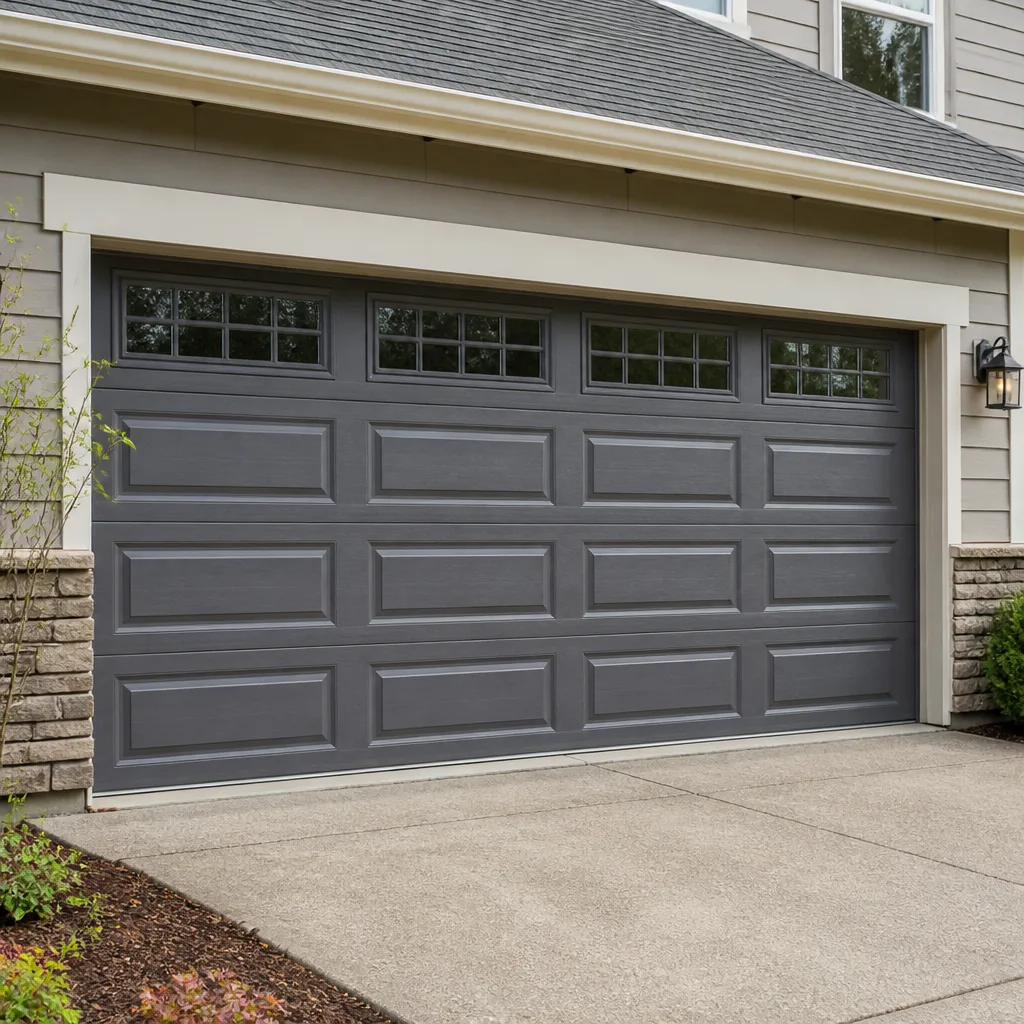
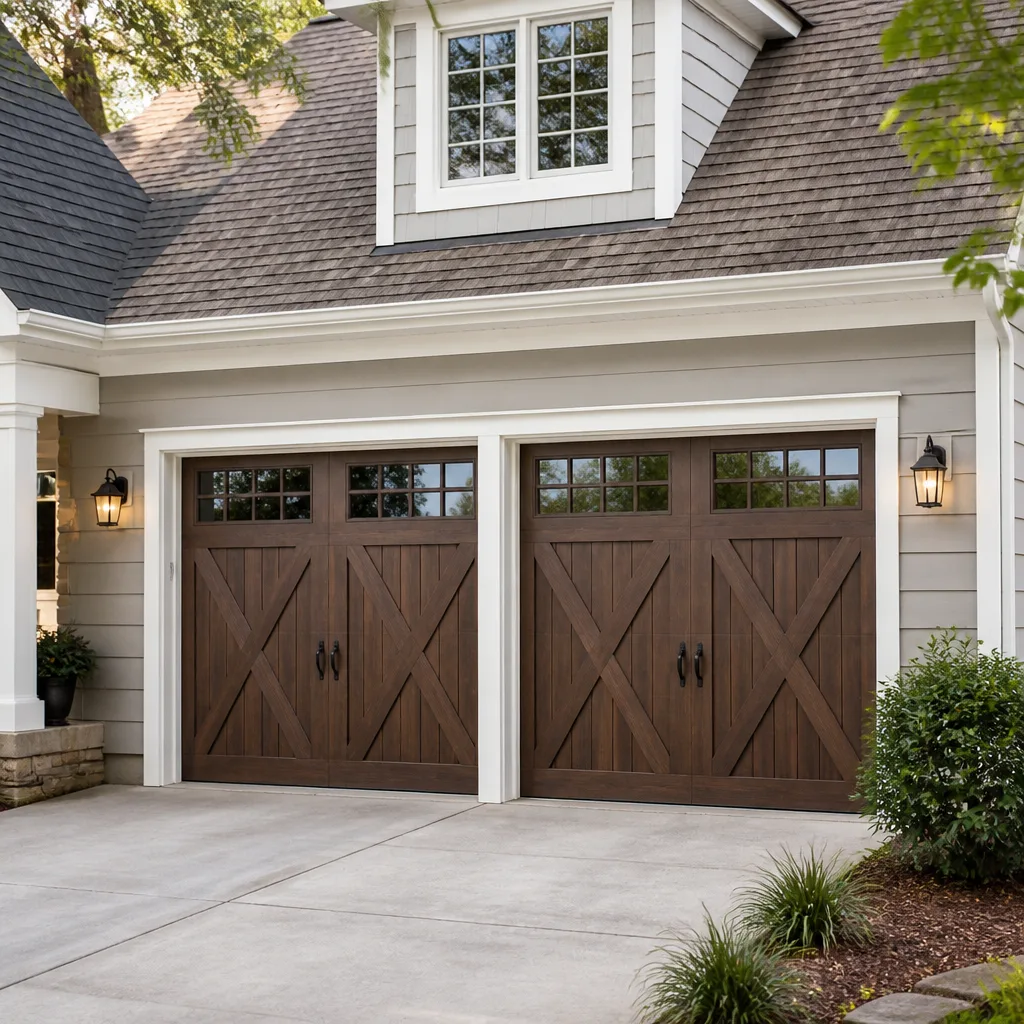
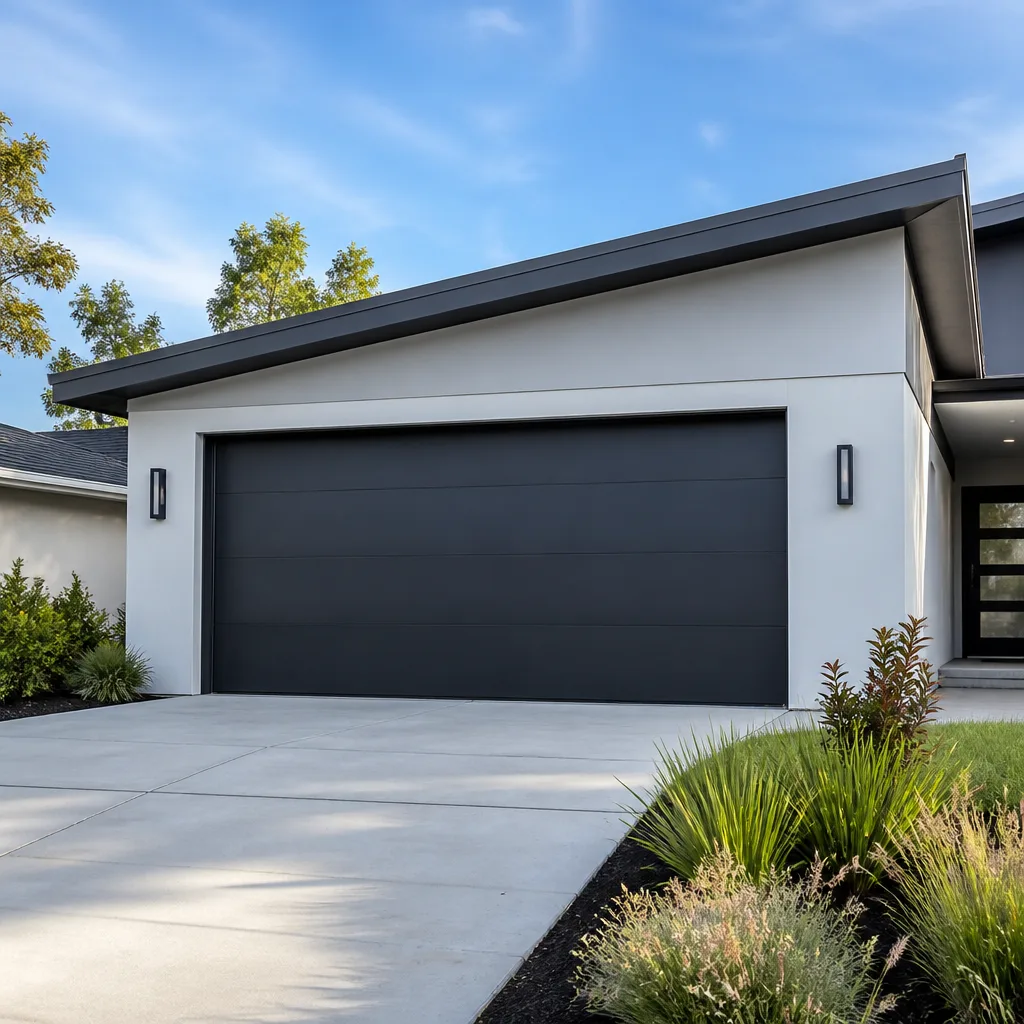
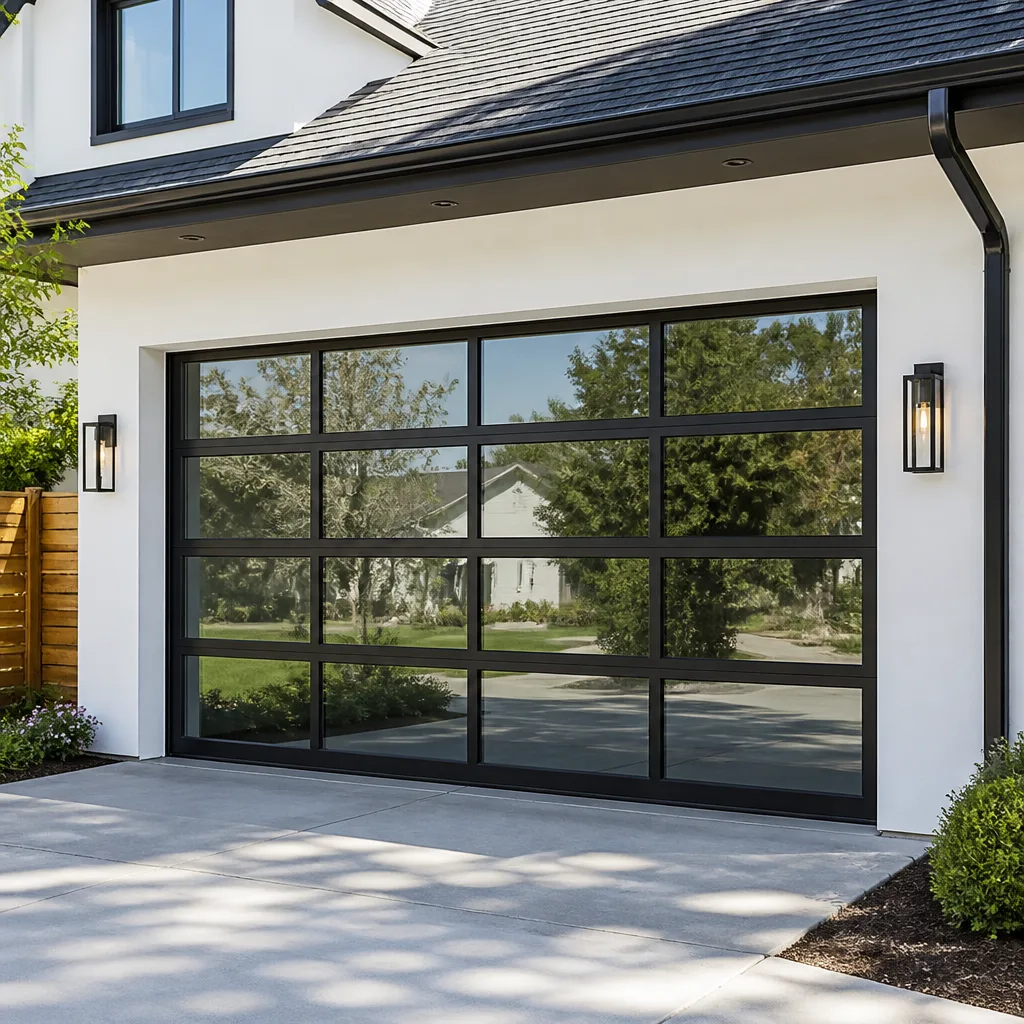
 Before
 After
After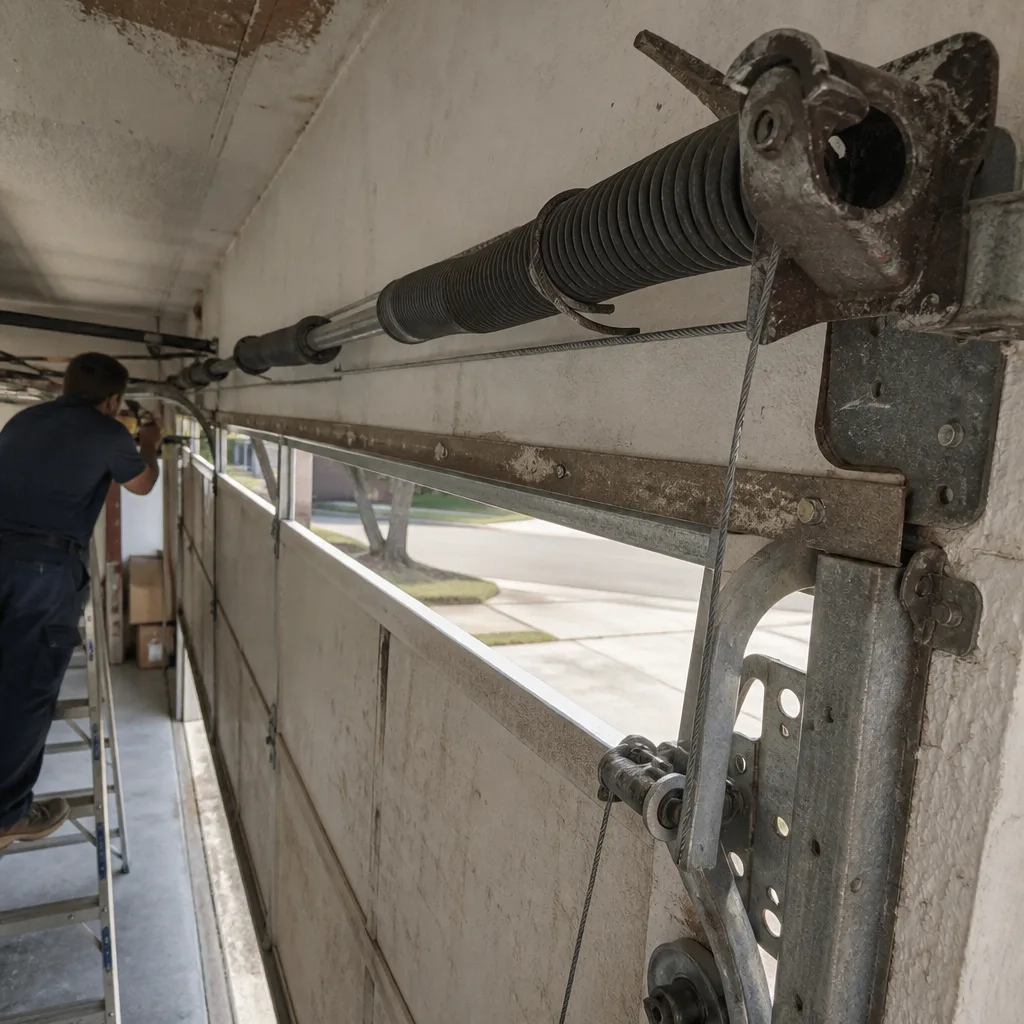 Before
 After
After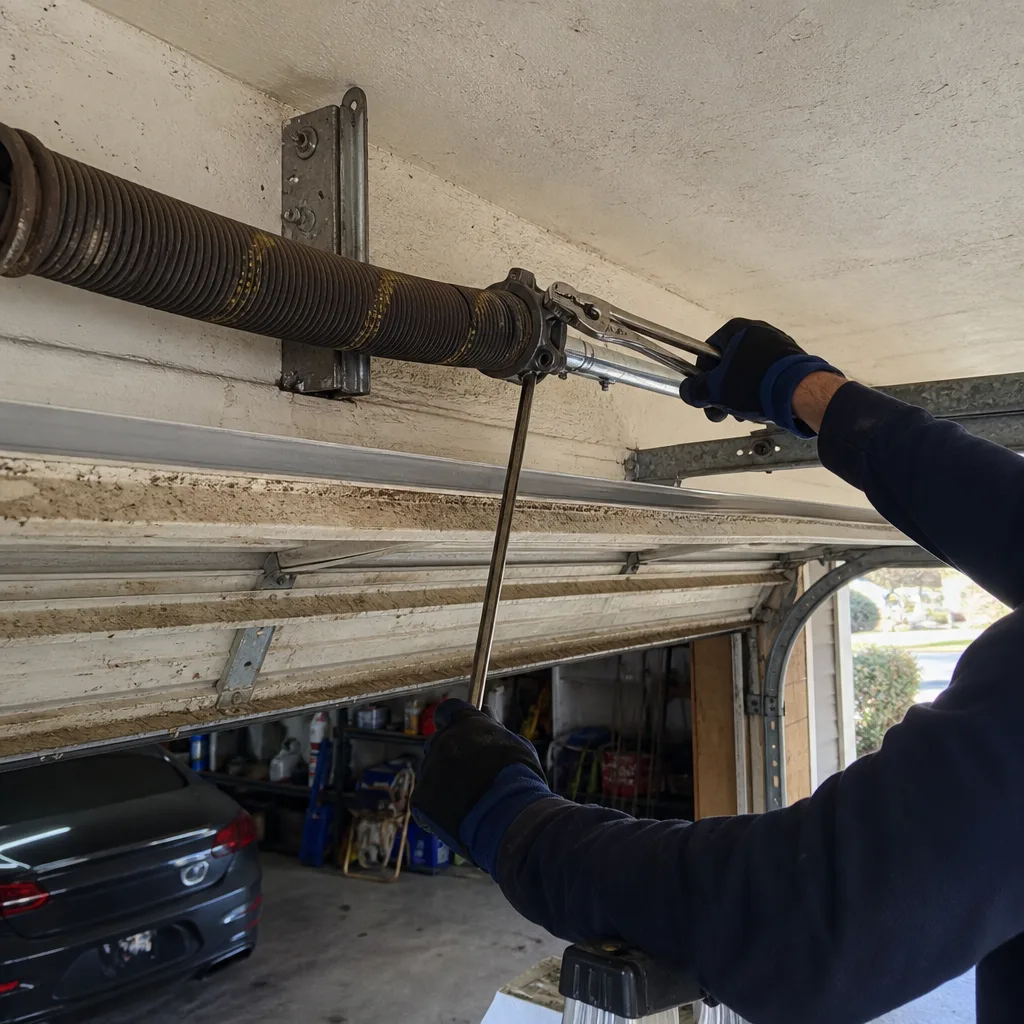 Before
 After
AfterThe Complete Guide to Garage Door in Grand Prairie
Grand Prairie averages 48 severe weather events per year, yet most garage door guides are written as if every driveway sits in San Diego. That matters here more than most places. The Blackland Prairie clay beneath your foundation swells and shrinks with every rain and drought cycle. Summer attic temperatures in Grand Prairie regularly hit 140°F. And when baseball-sized hail comes through Tarrant County, your garage door is often the largest unprotected surface on your home.
In this guide and our more guides & resources, we’ll walk through what actually holds up in Grand Prairie conditions - from steel gauge ratings that survive hail season to spring systems that handle our temperature swings without failing prematurely. You’ll learn how local soil shifts affect track alignment, how to read thermal ratings against real attic heat, and what a proper installation looks like versus a box-store special that leaves you calling for help in year three.
Quick Answer
A garage door in Grand Prairie should be a 24- to 25-gauge steel door with a minimum R-value of 10, installed with a torsion spring system on a properly anchored track that accounts for clay-soil foundation movement. Most homeowners here replace their door every 15-20 years, though hail damage and spring failures often accelerate that timeline. Expect to invest $1,200-$3,800 for a quality residential installation, depending on size, insulation, and window configuration - see our Garage Door Cost Breakdown: The Grand Prairie Homeowner’s Reference for 2026 for detailed pricing.
Table of Contents
- How Grand Prairie Conditions Affect Your Garage Door
- Choosing the Right Door Material for North Texas
- Why Steel Gauge Matters More Than Brand Name
- Torsion vs. Extension Springs in Grand Prairie Heat
- Reading Insulation and R-Value Against Real Attic Temperatures
- Track Alignment and Clay-Soil Foundation Shifts
- Full-Service Installation vs. Box-Store Special
- A Realistic Maintenance Schedule for Grand Prairie
How Grand Prairie Conditions Affect Your Garage Door
Every garage door in Grand Prairie faces a specific stress profile you won’t find in national buying guides. Understanding it saves you from buying the wrong door and replacing it early.
Clay-soil foundation movement. The Blackland Prairie soils that run through Grand Prairie, Arlington, and Irving are expansive clays. They swell when wet and contract during drought. We’ve seen track bolts loosen and door frames shift half an inch in a single season. A door installed without expansion-aware anchoring will bind, rub, or throw itself off the track within two to three years.
Temperature extremes. Grand Prairie summer highs average 96°F, but attic temperatures above a south-facing garage commonly reach 130-140°F. That heat degrades lubricants, weakens spring temper, and warps vinyl components. Winter lows in the mid-20s contract metal parts and stiffen weatherstripping. The thermal cycling is hard on everything mechanical.
Hail and wind. The Dallas-Fort Worth corridor sits in Tornado Alley’s southern edge. Grand Prairie sees hail events that dent thin steel, shatter standard windows, and peel away poorly attached trim. Wind ratings matter here in ways they don’t in milder climates.
UV exposure. West- and south-facing doors take relentless sun. Fading and surface degradation on lower-quality finishes are visible within four to five years.
These conditions don’t mean you need an exotic door. They mean you need the right specifications installed with local knowledge. We’ve been working on Grand Prairie garage doors since 1984, and the patterns are consistent: doors fail where specifications were ignored or installation cut corners.
Choosing the Right Door Material for North Texas
Four materials dominate the Grand Prairie market. Each has genuine use cases and genuine limitations.
Steel. This is what we install most often, and for good reason. Quality steel doors resist hail, don’t warp in heat, and require minimal maintenance. The downside is thermal conductivity - uninsulated steel radiates heat into your garage. We recommend steel only with factory-applied insulation and a baked-on finish rated for UV exposure. In Grand Prairie, an uninsulated steel door turns your garage into an oven from May through September.
Aluminum. Lighter than steel and immune to rust, which matters in humid Gulf Coast conditions. But aluminum dents more easily and offers less structural rigidity. We see it work well for oversized doors where weight matters, or in coastal-style homes where the aesthetic fits. For standard residential use in Grand Prairie, steel typically outperforms it.
Wood and wood composite. Beautiful when maintained, but maintenance is the issue. Grand Prairie’s UV and humidity swings crack finishes and swell panels. We’ve replaced wood doors in Lake Ridge and Mira Lagos that looked stunning at installation and weathered badly within six years. If you want the wood look, consider steel with a realistic wood-grain overlay - several manufacturers offer convincing options now.
Fiberglass. Resistant to salt and moisture, which isn’t our primary concern inland. It can yellow in intense UV and becomes brittle in cold snaps. We rarely recommend it for Grand Prairie unless there’s a specific architectural requirement.
For most Grand Prairie homeowners, insulated steel is the practical choice. The question becomes which steel and which insulation, which we’ll cover next.
Why Steel Gauge Matters More Than Brand Name
Homeowners often ask us which brand to buy. The honest answer: for durability in Grand Prairie, steel gauge and construction details matter more than the logo on the panel.
Steel gauge is backward - lower numbers mean thicker metal. Here’s what actually survives here:
- 24-gauge steel: The standard for quality residential doors. Resists denting from moderate hail and everyday impacts. Suitable for most Grand Prairie homes.
- 25-gauge steel: Acceptable for protected garages or budget-conscious replacements, but more vulnerable to hail damage. We see more dent repair calls on 25-gauge doors after spring storms.
- 26-gauge and thinner: Common in big-box promotional doors. Dents easily, noise transmits readily, and longevity suffers. We replace a lot of these at year eight to twelve.
- 20-gauge steel: Heavy-duty residential or light commercial. Worth considering for large doors or homes in exposed locations.
Construction details matter too. Look for:
- Galvanized steel on both faces, not just the exterior. Rust starts from the inside out.
- Tongue-and-groove panel connections that lock together for structural integrity and thermal break.
- Reinforced bottom brackets that won’t tear out under wind load or impact.
- Factory-applied finish with UV inhibitors, not a primer coat that needs field painting.
We’ve installed and serviced Amarr, Wayne Dalton, and Craftsman doors across Grand Prairie for decades. Each brand makes good products and each makes economy lines. The gauge and construction specifications tell you what you’re actually getting, regardless of brand name.
Torsion vs. Extension Springs in Grand Prairie Heat
The spring system is the most misunderstood component of a garage door. It also does the most work and creates the most danger when it fails.
Your garage door weighs 150 to 400 pounds. The springs counterbalance that weight so your opener - rated for 10-15 pounds of pull - can lift it. When springs fail, the door becomes dead weight. Attempting to open it strains the opener and risks the door crashing down.
Extension springs run parallel to the horizontal tracks, stretching and contracting as the door moves. They’re cheaper to install and common on lighter doors. The problems in Grand Prairie: they wear faster under heavy cycling, they’re more exposed to attic heat that degrades the metal, and when they break they can whip violently along the track. We’ve replaced extension systems that failed in as little as five years here.
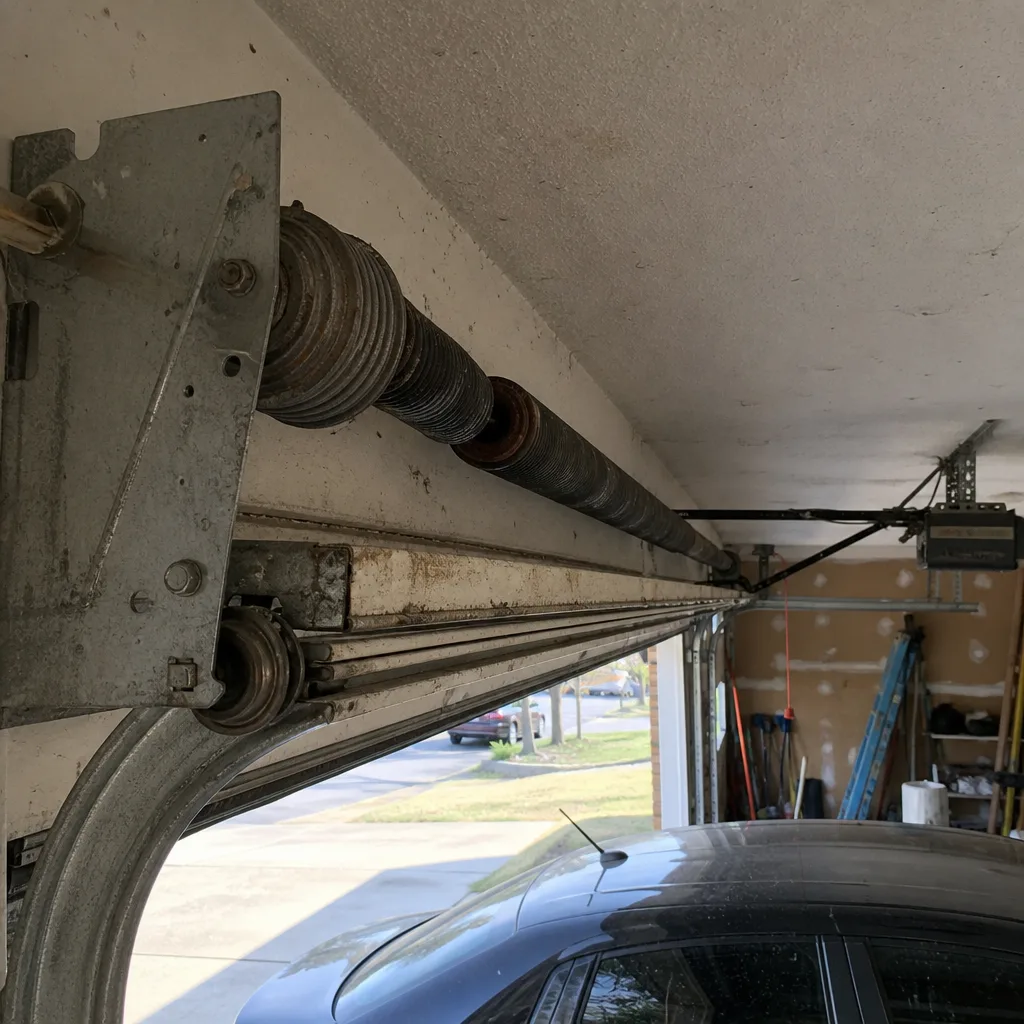
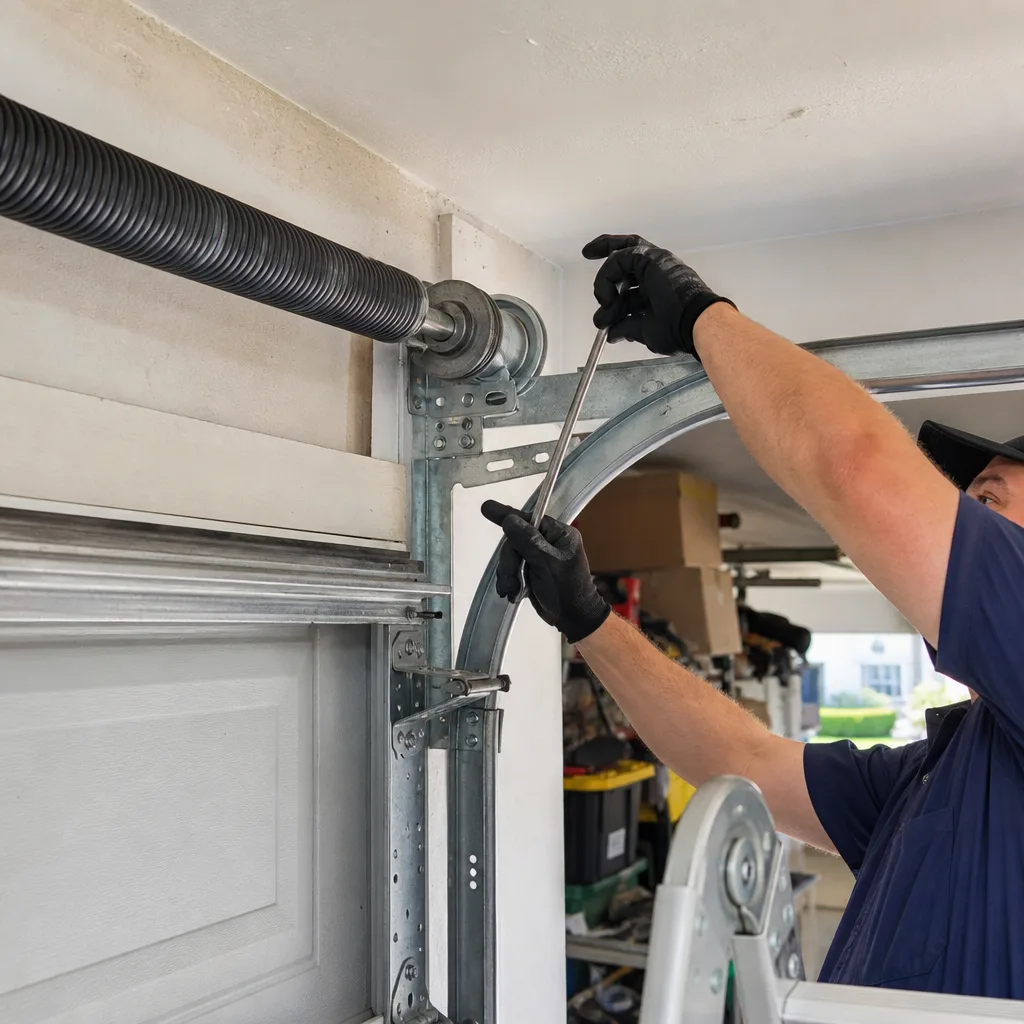
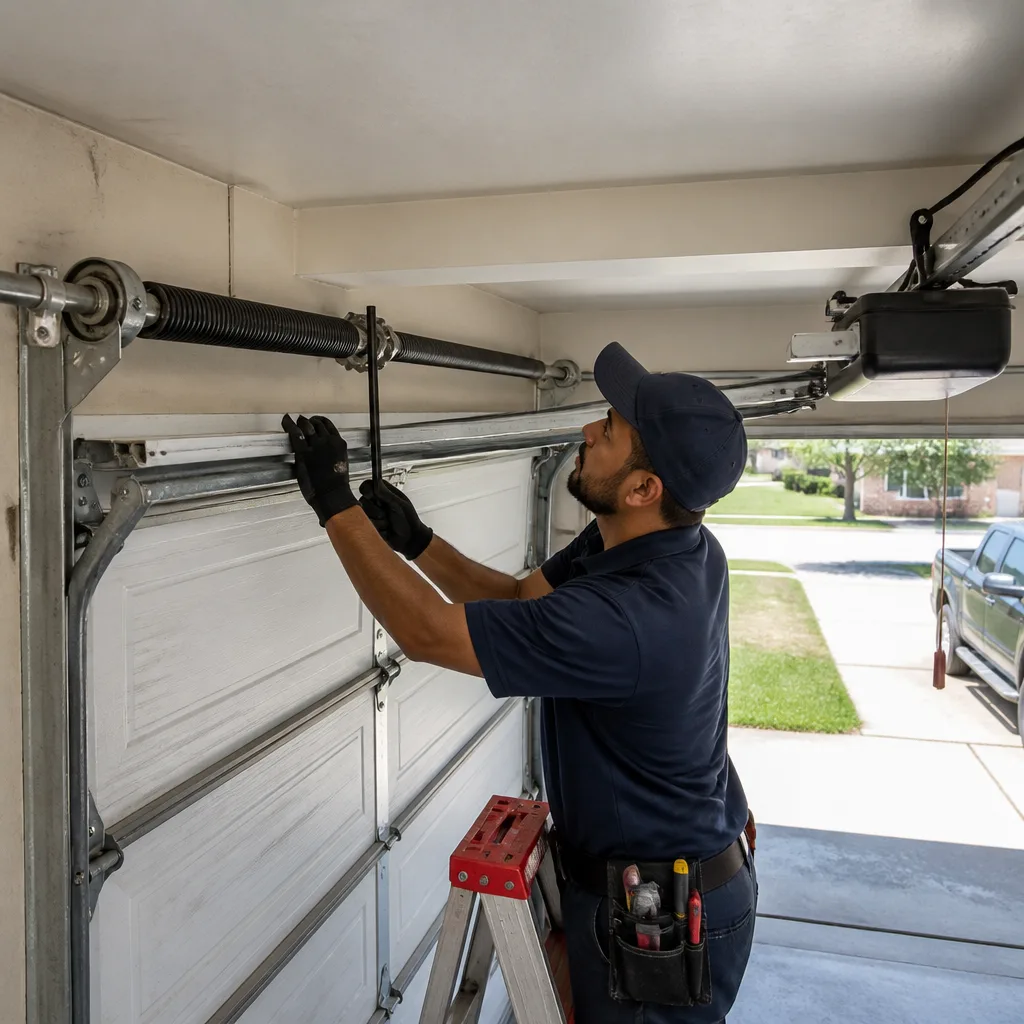
Torsion springs mount on a steel shaft above the door, twisting to store energy. They’re more compact, cycle more smoothly, and last longer - typically 10,000 to 20,000 cycles versus 5,000 to 10,000 for extension springs. The torsion assembly is better protected from dust and heat, and a broken torsion spring unwinds safely on its shaft rather than whipping loose.
For Grand Prairie’s temperature swings and heavy-use households, we recommend torsion springs in almost every case. The upfront cost difference is modest - usually $150-$300 on a full installation - and the longevity and safety advantages are substantial.
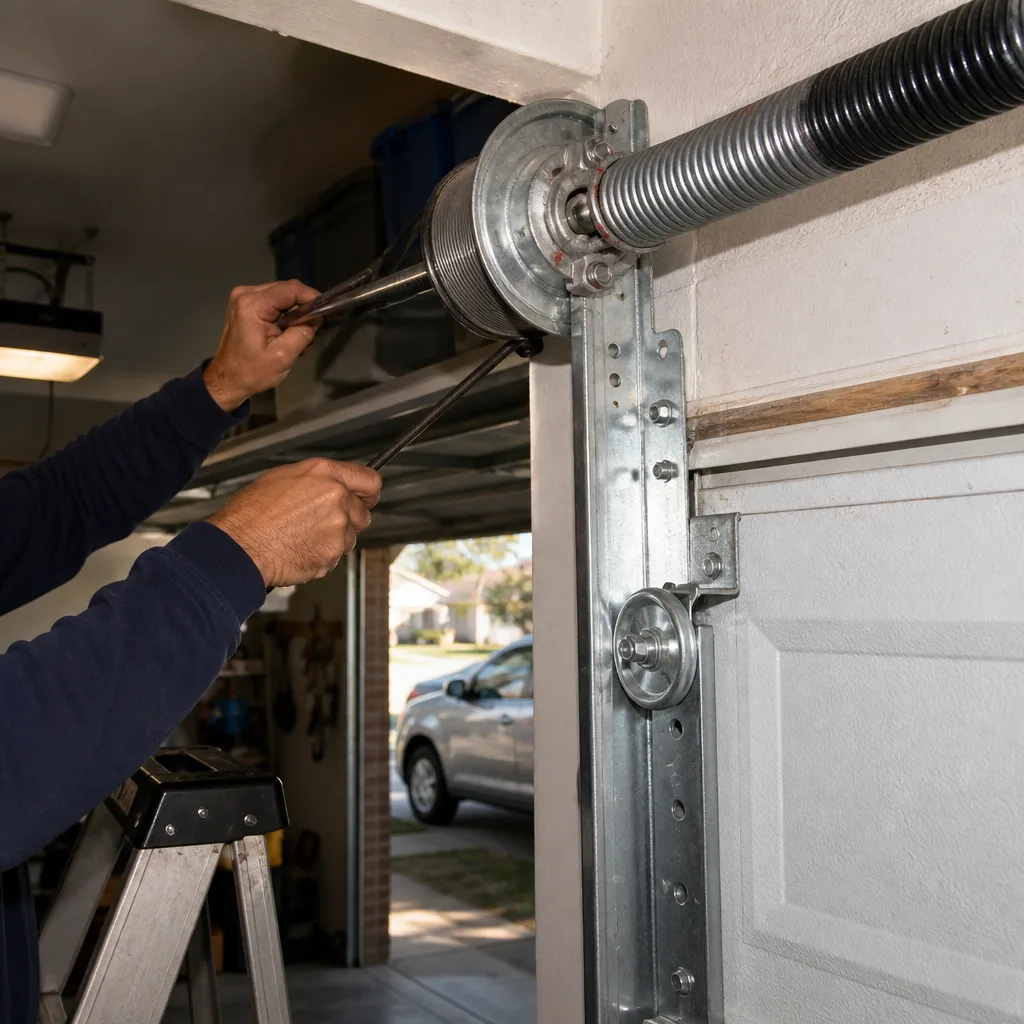
Safety note: Garage door springs are under extreme tension. A winding bar slipped from a torsion spring can cause serious injury. We do not recommend homeowners attempt spring replacement themselves. Our technicians carry the proper winding bars and tension gauges, and every spring installation is covered by our Garage Door Repair in Grand Prairie service with the 90-Day Done Right Promise.
Reading Insulation and R-Value Against Real Attic Temperatures
Insulation ratings on garage doors confuse a lot of Grand Prairie homeowners. Here’s how to read them usefully.
R-value measures thermal resistance - higher numbers mean better insulation. But garage door R-values are calculated differently than wall insulation, and the testing conditions don’t match your actual garage. A door rated R-12 was likely tested with the door horizontal in a climate-controlled lab, not vertical in a 140°F Grand Prairie attic.
Practical guidance for our market:
| R-Value | Best For | Real-World Performance in Grand Prairie |
|---|---|---|
| R-6 to R-8 | Detached garages, mild climates | Minimal heat reduction; garage stays hot |
| R-10 to R-12 | Attached garages, standard residential | Meaningful improvement; adjacent rooms feel cooler |
| R-16 to R-18 | Workshops, conditioned spaces, west-facing doors | Substantial thermal barrier; worth the investment for heavy-use garages |
Insulation type matters too. Polystyrene is the basic option - rigid foam bonded to steel panels. Polyurethane is injected as a liquid that expands and adheres, filling gaps and adding structural rigidity. Polyurethane costs more but performs better thermally and acoustically. For a Grand Prairie garage that shares a wall with living space, we typically recommend polyurethane to R-12 minimum.
Also consider the thermal break - a separator between interior and exterior steel skins that reduces heat transfer. Quality doors include this; economy doors often don’t. In direct summer sun, a door without a thermal break can have a 40°F temperature difference between outer and inner surfaces.
We’ve measured attic temperatures in Grand Prairie homes during July that exceeded 145°F. In that environment, R-value isn’t about comfort alone - it’s about reducing the load on your home’s cooling system and preventing the premature degradation of anything stored in the garage.
Track Alignment and Clay-Soil Foundation Shifts
This is the Grand Prairie-specific issue that national guides never mention. The clay soils here move, and that movement doesn’t stop at your foundation.
When soil swells, it lifts the garage slab slightly. When it dries and contracts, the slab settles. Over years, this creates subtle but real changes in the plane of your garage door opening. A track system installed perfectly plumb in March may be slightly out of alignment by August.
The symptoms show up gradually:
- The door binds or sticks at certain points in its travel
- Gaps appear between the door and weatherstripping on one side
- The opener strains or reverses unexpectedly
- Roller wear becomes uneven - some rollers worn flat, others nearly new
- The door makes popping or grinding noises it didn’t make before
Proper installation anticipates this. We use:
- Slotted track brackets that allow minor adjustment without re-drilling
- Expansion-appropriate anchors set deep enough to resist pullout from soil movement
- Reinforced vertical track that maintains alignment under stress
- Regular inspection schedule - we recommend annual track and roller checks in Grand Prairie, included in our $89 Seasonal Tune-Up
In neighborhoods like Westchester and Dalworth Gardens, where homes date to the 1960s and 1970s, we’ve seen foundation movement that’s required track realignment every two to three years. Newer construction in Lake Parks or Turner Park has more stable engineered fill, but the clay is still there. The door system needs to accommodate reality, not pretend the ground is static.
If your door has started showing alignment symptoms, Garage Door Repair in Grand Prairie from a local shop that understands these soils beats a national chain that treats every market the same.
Full-Service Installation vs. Box-Store Special
The price gap between a full-service garage door company and a box-store install can be $400-$800. That difference buys more than convenience.
What box-store installation typically includes: delivery of a standard-size door, a subcontractor who measures on arrival, installation of the door and standard hardware, and a warranty that runs through the retailer. What it often lacks: site-specific assessment, adjustment for non-standard openings, quality hardware upgrades, and responsive service when problems emerge.
What full-service installation includes: pre-installation site evaluation, custom sizing for actual opening dimensions, structural assessment of header and jambs, proper spring sizing for door weight, weatherstripping selection for your exposure, and ongoing service relationship with technicians who know your door. We also handle any Garage Door Permits, Codes & Inspections in TX: What You Need to Know requirements.
The critical differences for Grand Prairie homeowners:
- Spring sizing. Box-store installers often use whatever spring is in the truck. An undersized spring fails early; an oversized spring strains the opener. We calculate spring requirements from actual door weight and desired cycle life.
- Track anchoring. As discussed, clay soils require specific anchoring approaches. We’ve reinstalled tracks that pulled loose from inadequate fasteners within two years of box-store installation.
- Weatherstripping detail. Grand Prairie’s wind and dust demand tight perimeter seals. Gaps of even a quarter-inch admit dust, pests, and conditioned air loss.
- Post-installation adjustment. New doors settle and shift in the first six months. We include a follow-up adjustment visit - box-store installs typically don’t.
We’ve been called to fix enough box-store installations that we now offer a Free Second Opinion on any written estimate. Bring us the quote; we’ll show you what’s specified and what’s assumed. No obligation, no pressure. A square deal starts with knowing what you’re actually buying.
For new door installation, Garage Door Installation in Grand Prairie through Mainspring includes all of the above, plus our 90-Day Done Right Promise in writing on every job.
A Realistic Maintenance Schedule for Grand Prairie
Garage doors in Grand Prairie need more frequent attention than manufacturer guidelines suggest, because our conditions are harder than the national average. Here’s what we recommend based on four decades of local service.
Every three months:
- Visual inspection of springs, cables, and rollers for wear or fraying
- Lubrication of hinges, rollers, and bearings with silicone-based lubricant (not WD-40, which attracts dust)
- Test of auto-reverse safety sensors - place a 2×4 flat on the threshold and verify the door reverses on contact
- Check weatherstripping for gaps, cracks, or hardening
Every six months:
- Track alignment check - look for gaps between rollers and track, or binding in travel
- Tightening of all hardware, especially track brackets and opener mounting bolts
- Balance test - disconnect opener and lift door manually; it should stay at mid-travel without drifting
- Inspection of exterior finish for UV damage or corrosion
Annually:
- Professional tune-up including spring tension verification, opener force settings, and comprehensive hardware inspection
- Replacement of worn rollers before they fail
- Assessment of door balance and spring cycle life remaining
Our $89 Seasonal Tune-Up covers the annual professional inspection. For most Grand Prairie homeowners, that’s the single most cost-effective maintenance investment. Catching a worn cable or imbalanced spring before it fails prevents the emergency service call and the potential damage from a door coming down uncontrolled.
We’ve found that doors on our regular maintenance schedule last 30-40% longer than neglected doors. The math is straightforward: $89 annually versus $1,200-$3,800 for premature replacement.
Common Mistakes to Avoid
- Buying on brand name alone. A premium-brand door in 26-gauge steel performs worse than a mid-line door in 24-gauge. Check specifications, not marketing.
- Ignoring the spring system in the quote. Some installers quote the door panel price and add springs later. Torsion springs should be specified upfront with cycle rating.
- Installing an uninsulated door on a west- or south-facing garage. In Grand Prairie, that’s a recipe for overheated garages, faded interiors, and higher cooling bills.
- DIY spring replacement after watching online videos. We’ve treated injuries from homeowners who attempted this. The stored energy in a wound torsion spring is lethal. Call a professional.
- Accepting “standard size” without measuring. Grand Prairie homes built from the 1950s through 1980s often have non-standard openings. A door ordered without field measurement leaves gaps or requires expensive modification.
- Neglecting the opener when replacing the door. A 25-year-old opener rated for a 150-pound door will struggle with a modern insulated door that weighs 250 pounds. Match the opener to the actual door weight.
- Choosing the lowest bid without comparing specifications. We’ve rebuilt installations where the “savings” evaporated in repair costs by year four. Compare gauge, insulation, spring type, and hardware detail line by line.
When to Call a Professional
Some situations demand immediate professional attention. A door that won’t stay open, a broken spring, a cable off the drum, or an opener that reverses unpredictably - these are safety hazards, not weekend projects. A door that has come off its track can collapse without warning.
Also call when you notice gradual changes: increasing noise, slower operation, or gaps that weren’t there before. These often precede failure by weeks or months, and early intervention costs less than emergency repair.
Mainspring Garage Door Co. offers free estimates in Grand Prairie. We’ll assess your door, explain what we find, and quote a flat price before any work begins. No surprises on the bill. Call (972) 645-4416 to schedule. Our phones are answered by a live person, 24 hours a day, including nights, weekends, and holidays.
For opener-specific concerns, see our Garage Door Opener in Grand Prairie service page.
Frequently Asked Questions
A quality insulated steel garage door installed in Grand Prairie typically runs $1,200-$3,800, depending on size, gauge, insulation level, and window options. Single-car doors with basic R-10 insulation start near the lower end; double-car doors with polyurethane insulation, windows, and decorative hardware approach the upper end. We provide written, itemized quotes before any work begins, and our Free Second Opinion offer applies to any competitor’s written estimate. Call (972) 645-4416 for an exact quote - estimates are free.
With proper maintenance, a quality steel door in Grand Prairie lasts 15-25 years. Hail events, salt air exposure near Joe Pool Lake, and neglected maintenance shorten that. Torsion springs typically last 10-15 years depending on use cycles. Our maintenance customers regularly see 20+ years from their doors. The key is addressing small issues before they compound.
We do not recommend it. Garage door springs store lethal tension - a standard torsion spring holds enough energy to cause serious injury or death if released improperly. Winding bars can slip, cables can snap, and improperly wound springs can unwind violently. Our technicians carry specialized tools and training, and every spring replacement is covered by our 90-Day Done Right Promise. The risk is not worth the savings.
24-gauge or heavier steel with reinforced panel construction offers the best hail resistance for most homes. We also recommend impact-rated windows or omitting windows on the storm-facing side if hail is a particular concern. After the 2012 and 2019 hail events in Tarrant County, we replaced numerous 26-gauge doors that dented severely while adjacent 24-gauge doors showed only minor cosmetic damage.
Disconnect the opener by pulling the red release cord, then lift the door manually to waist height. A properly balanced door stays in place without drifting up or down. If it falls or rises on its own, the springs need adjustment. This test takes thirty seconds and reveals problems before they cause opener strain or safety hazards. If your door fails this test, call for service - spring adjustment is not a DIY task.
Yes, for repair and emergency calls. Our trucks carry springs, cables, rollers, and openers for all major brands, so most repairs are completed in a single visit. We answer calls live 24/7, and we prioritize doors that are stuck open or stuck closed for security reasons. For new door installations, we schedule a free measure and provide a written quote - that work is measured, ordered, and installed, not dispatched same-day. Call (972) 645-4416 to discuss your situation.
The Bottom Line
A garage door in Grand Prairie needs to handle clay-soil movement, 140°F attic heat, and hail that would shred a lesser door. That means 24-gauge steel minimum, polyurethane insulation to R-12, torsion springs sized for actual door weight, and track anchoring that anticipates foundation shift. Buy on specifications and local installation expertise, not brand name or lowest bid. Maintain it annually. And when something changes - noise, binding, or failure - address it before it becomes an emergency.
We’ve been installing and servicing garage doors in Grand Prairie since 1984. We arrive with the right parts, state the flat price before the work starts, and stand behind every job for 90 days in writing. That’s how we’ve built a 42-year reputation in this community.
Written by Carl Dutton, Owner at Mainspring Garage Door Co., serving Grand Prairie since 2016.