
Last updated September 10, 2026
Full 25-point door and opener safety check with every visit - springs, cables, rollers, tracks, and your LiftMaster or Chamberlain opener included
You get a price before we start. It does not change when the truck arrives.
 Before
 After
After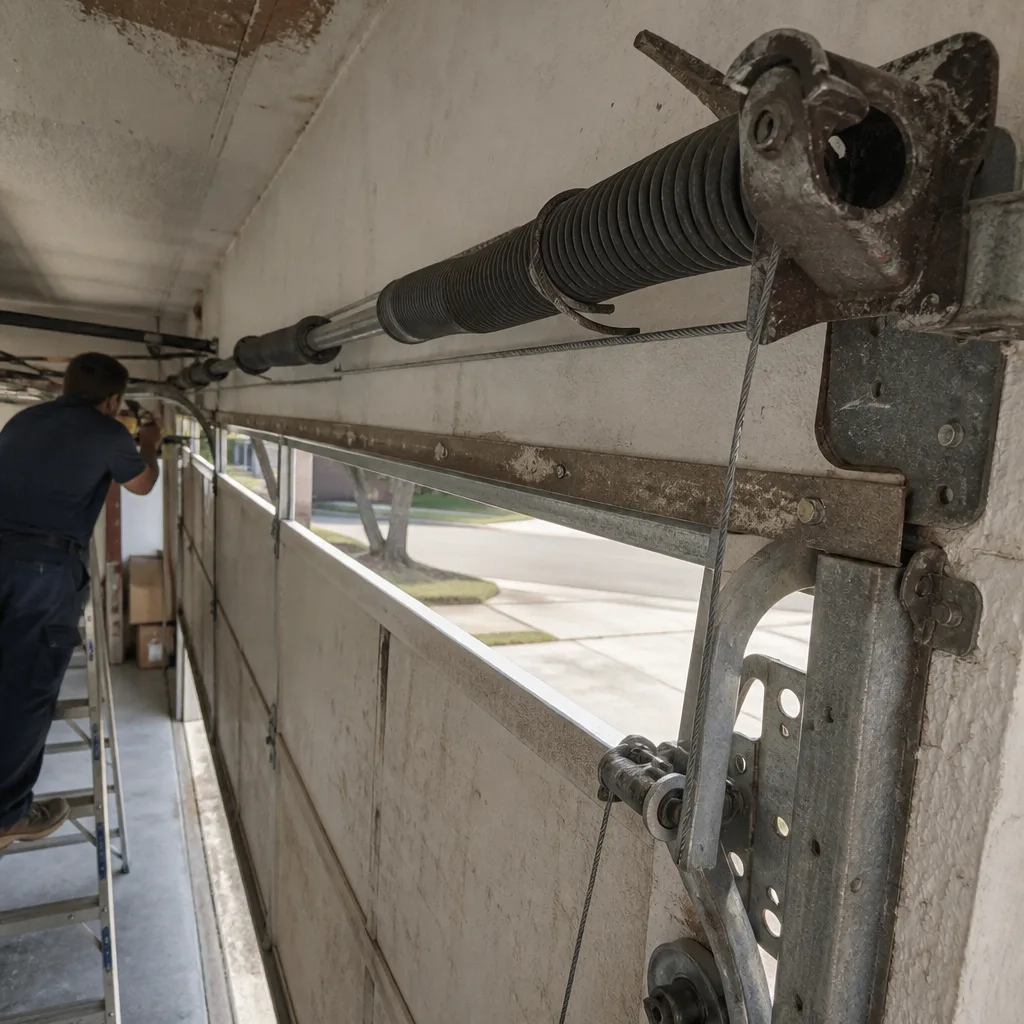 Before
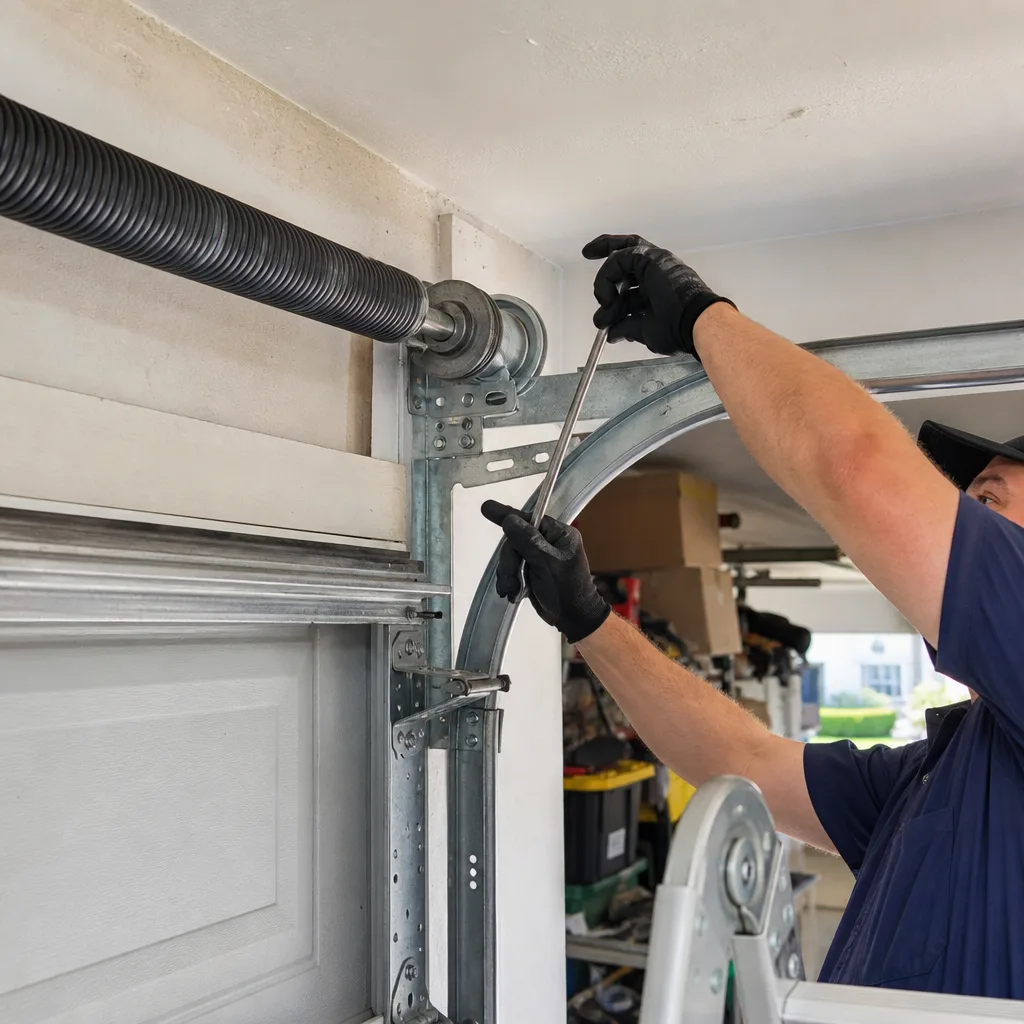 After
After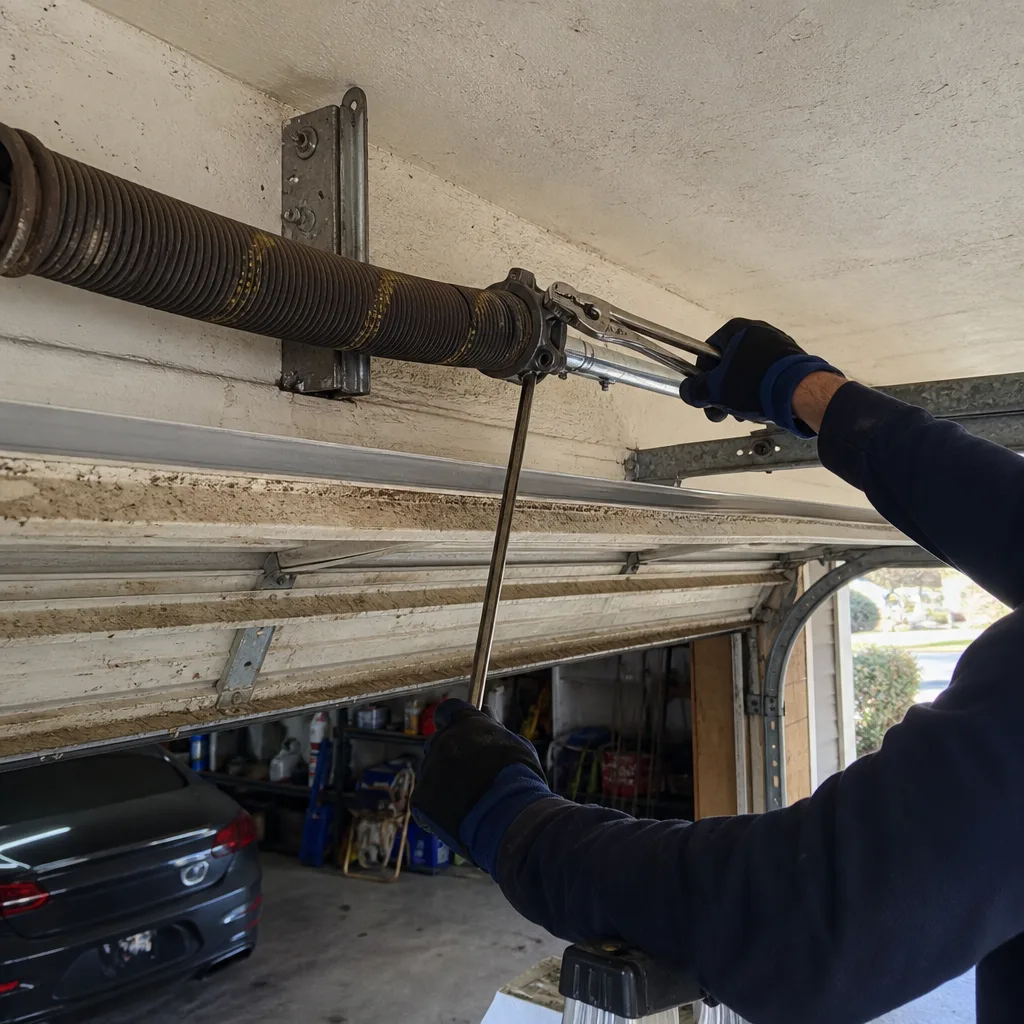 Before
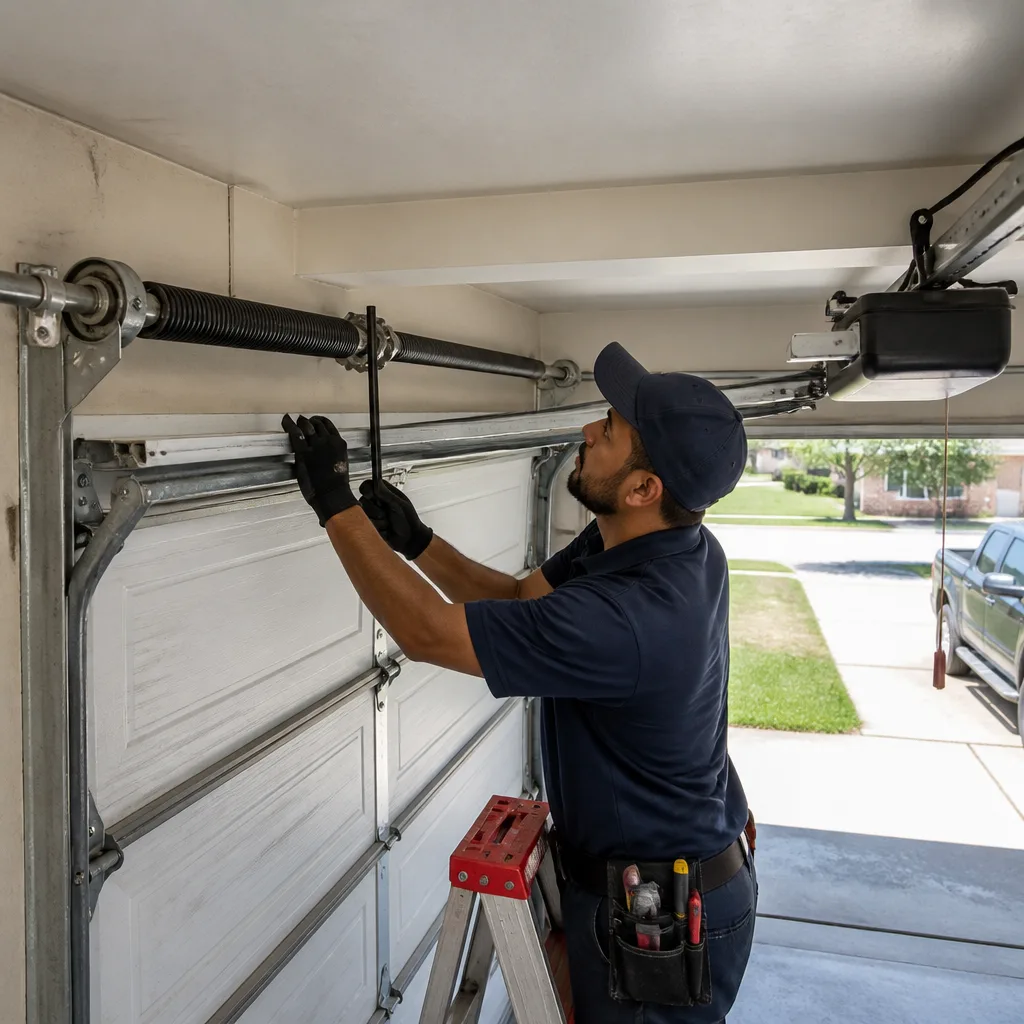 After
AfterGarage Door Permits, Codes & Inspections in TX: What You Need to Know
Installing a new garage door without the required permit in certain Texas cities can void your homeowner’s insurance claim if the door fails during a storm. Most homeowners assume a garage door replacement is simple maintenance, but municipalities across North Texas treat it as structural work subject to building codes, wind-load requirements, and inspection. In Grand Prairie, the rules differ from neighboring Arlington and Irving in ways that affect both new installs and replacements. This guide explains exactly where permits are required, how to pull them, what inspectors look for, and how to avoid a failed inspection or uncovered insurance claim. For related reading, see our Garage Door Repair Maintenance Checklist for Grand Prairie Homeowners.
Quick Answer
Garage door permits are required in many Texas municipalities for new installations and sometimes for replacements, depending on whether the work is “like-for-like.” Grand Prairie requires permits for new garage door installations and for replacements that change the door size, wind-load rating, or structural opening. Most North Texas cities follow the 2021 International Residential Code with local amendments, requiring a minimum wind-load rating of 90 mph for garage doors.
Table of Contents
- Which Texas Cities Require Permits for Garage Door Work?
- What “Like-for-Like Replacement” Means Under Texas Code
- How the International Residential Code Applies to North Texas Garage Doors
- How to Pull a Permit: DIY vs. Contractor
- What Inspectors Look For and How to Pass the First Time
- Permits, Inspections, and Your Homeowner’s Insurance
- Grand Prairie Code Requirements: What Makes Them Different
- Permit Costs and Timeline Expectations
Which Texas Cities Require Permits for Garage Door Work?
Texas does not have a statewide garage door permit law. Requirements are set city by city, and the patchwork confuses even experienced contractors. We have pulled permits across the Dallas-Fort Worth metroplex for 42 years, and the rules shift at every municipal boundary.
Here is how major North Texas cities handle garage door permits:
- Grand Prairie: Requires a building permit for all new garage door installations. Replacement of an existing door with the same size and wind-load rating may qualify as “like-for-like” and be exempt, but the exemption must be verified with the Building Inspections Department before work begins. Electrical work on openers always requires a separate permit.
- Arlington: Requires permits for new installations and for any replacement that alters the rough opening, changes from a sectional to a roll-up door, or upgrades the wind-load rating. Arlington enforces stricter documentation of wind-load compliance than many neighboring cities.
- Irving: Requires permits for new installations. Replacements are generally exempt if dimensions and wind-load ratings remain unchanged, but Irving requires pre-approval from the building official for any door in a flood-prone zone, which includes parts of the Las Colinas area.
- Dallas: Requires permits for all garage door work on new construction. Existing homes may be exempt for like-for-like replacements, but Dallas has aggressive enforcement in historic districts and floodplains.
- Fort Worth: Requires permits for new installations and for replacements that modify the header, change door type, or affect egress requirements in garage conversions.
- Plano, Frisco, McKinney: Generally require permits for new installations. Like-for-like replacements are often exempt, but these northern suburbs have adopted stricter energy code amendments that can affect insulated door specifications.
- Unincorporated areas (Tarrant, Dallas, Ellis counties): No municipal permit required, but work must still comply with IRC standards for wind load and safety. Homeowner’s insurance may still demand permit documentation for claims.
The safest approach is to call your city’s Building Inspections Department before any work begins. Ask specifically: “Does this project require a permit under your current amendments to the International Residential Code?” Get the name of the person you spoke with and note the date. In Grand Prairie, the Building Inspections Division operates out of City Hall on Main Street, and staff will confirm permit status by phone.
What “Like-for-Like Replacement” Means Under Texas Code
“Like-for-like” is the most misunderstood term in residential garage door permitting. Homeowners and some contractors treat it as a catch-all exemption. It is not.
Under the 2021 IRC as adopted by most Texas municipalities, a like-for-like replacement means:
- The new door matches the existing door in width and height within manufacturer tolerances, typically plus or minus one inch.
- The wind-load rating equals or exceeds the existing door’s rating, not falls below it.
- The door type remains the same: sectional replaces sectional, roll-up replaces roll-up, not a conversion between types.
- The track system, spring configuration, and hardware mounting do not require structural modification to the header, jambs, or rough opening.
- No changes are made to the electrical supply or opener mounting that would trigger electrical code review.
Where homeowners get into trouble: they buy a “standard” replacement door from a big-box store without checking the wind-load rating of their original door. In Grand Prairie and across Tarrant County, many homes built before 2000 have garage doors rated for 70 mph wind loads. The current IRC minimum for this region is 90 mph. A direct replacement of a 70 mph door with another 70 mph door may fail inspection or void insurance coverage, even if dimensions match exactly. Learn to spot these risks early in our Garage Door Warning Signs: A Grand Prairie Homeowner’s Reference Guide.
We have seen this in the Dalworth Park and Westchester neighborhoods of Grand Prairie, where 1980s and 1990s construction predates modern wind-load standards. Homeowners replace a worn door with what appears to be an identical model, only to learn their insurance carrier requires documentation of 90 mph compliance for storm coverage.
The correct process: verify the existing door’s wind-load rating from the manufacturer’s label, usually found on the interior face or edge of the door section. If the rating is below current code, the replacement is not like-for-like under modern standards, and a permit with upgrade documentation is required.
How the International Residential Code Applies to North Texas Garage Doors
The 2021 International Residential Code, with Texas amendments, governs garage door construction across the state. Most North Texas municipalities have adopted this code with local modifications. The section that matters for garage doors is R301.2, which establishes wind-load requirements based on geographic wind speed contours.
North Texas sits in a 90 mph wind-speed zone under IRC mapping. This means every garage door installation must be rated to withstand sustained winds of at least 90 mph, with corresponding pressure ratings for the door assembly, track, and hardware. The rating is not just the door slab; it includes the complete system: springs, cables, rollers, hinges, track brackets, and fasteners.
Key technical requirements:
- Wind-borne debris region: The IRC defines this as areas within one mile of coastal mean high water lines. North Texas is not in this region, so impact-rated doors are not mandated by code. However, some insurance carriers in Grand Prairie and Arlington offer premium discounts for impact-rated or reinforced doors, particularly in hail-prone zones.
- Pressure ratings: A 90 mph wind-load rating translates to specific design pressure values measured in pounds per square foot (psf). For a standard 16-foot by 7-foot residential garage door, this typically requires a design pressure of plus or minus 15 to 20 psf, depending on exposure category. Exposure B applies to most sheltered suburban neighborhoods in Grand Prairie. Exposure C, with higher pressure requirements, applies to open terrain and some commercial zones.
- Labeling: Code-compliant doors carry a permanent label from the manufacturer or a certified testing laboratory (such as DASMA or ICC-ES) stating the wind-load rating, design pressure, and product compliance. Inspectors will look for this label during final inspection. Doors without visible labels will fail.
- Track and hardware: The wind-load rating applies to the complete installed assembly. A 90 mph door on inadequate track or with undersized fasteners fails code. In Grand Prairie’s older neighborhoods, we encounter wood framing around garage openings that cannot support modern wind-load hardware without reinforcement. This is common in homes built before 1985 in the Lake Parks and South Grand Prairie areas.
Texas amendments to the IRC generally align with national standards but allow municipalities to adopt stricter requirements. Grand Prairie has not adopted stricter wind-load minimums, but the city does enforce documentation requirements more rigorously than some neighboring jurisdictions. Permits in Grand Prairie require submission of the manufacturer’s installation instructions and a site plan showing the garage location on the property.
Brands we install regularly, including Wayne Dalton and Amarr, provide IRC-compliant documentation packages with every door. Craftsman and Raynor doors also carry proper labeling for Texas inspections. We keep these documents on file for every installation we perform in Grand Prairie.
How to Pull a Permit: DIY vs. Contractor
You have two paths: pull the permit yourself as the homeowner, or have your contractor pull it as part of the project. The choice affects liability, timeline, and who the inspector holds accountable if something fails.
Homeowner-Pulled Permits
Most Texas cities allow homeowners to pull their own permits for work on their primary residence. The process:
- Visit the municipal Building Inspections office or submit through the city’s online portal. Grand Prairie accepts online permit applications for residential garage door work through its Citizen Self Service portal.
- Complete the application with project scope, property address, and estimated value of work. The estimated value affects permit fees.
- Attach required documentation: site plan, manufacturer’s cut sheet showing wind-load rating, and installation instructions. For electrical work on openers, attach electrical plans or note that a licensed electrician will perform that portion.
- Pay the permit fee. See the cost section below for Grand Prairie specifics.
- Receive the permit card, which must be posted visibly at the job site before work begins.
- Schedule inspections at rough-in (if applicable) and final completion. In Grand Prairie, garage door inspections are typically final-only unless structural framing is modified.
The advantage of pulling your own permit: you control the timeline and the inspector communicates directly with you. The disadvantage: you are the responsible party. If the installation fails inspection, you must coordinate corrections. If a contractor installed the door and disappears, you are left holding the permit liability.
Contractor-Pulled Permits
A licensed contractor pulls the permit in their business name. The process is similar, but the contractor submits their license number, insurance certificate, and sometimes a bond. In Grand Prairie, contractors must register with the city and carry general liability insurance of at least $300,000.
The advantage: the contractor is the responsible party. If inspection fails, they must return and correct at their cost. The permit record ties to their license, creating accountability. This is the path we recommend for most homeowners, particularly for complex repairs or full replacements.
The disadvantage: you rely on the contractor’s schedule for permit submission and inspection scheduling. Some less scrupulous operators pull permits late or not at all, leaving you exposed.
Critical question to ask any contractor: “Will you pull the permit, and will I receive a copy of the approved final inspection before final payment?” A contractor who hesitates or suggests “we don’t need a permit for this” is a red flag. For help vetting installers, read our How to Hire a Garage Door Contractor in Grand Prairie: A Step-by-Step Guide. In 42 years of operation, Mainspring has never asked a Grand Prairie homeowner to pull their own permit. We handle the paperwork, the scheduling, and the inspector walkthrough. You receive the approved inspection report with your invoice.
What Inspectors Look For and How to Pass the First Time
Garage door inspections in Texas focus on three areas: structural integrity, safety systems, and code compliance documentation. Understanding what the inspector examines prevents the frustration and delay of a failed inspection and required re-inspection.
The Inspector’s Checklist
- Permit card posted: The permit must be visible from outside the garage, typically taped to the door or adjacent wall. No permit card, no inspection.
- Manufacturer’s label present and legible: The wind-load rating label must be affixed to the door and readable without disassembly. Labels painted over, removed, or installed on the exterior face (where weather degrades them) will cause failure.
- Track mounting and fasteners: Inspectors verify that track is secured to structural framing with appropriate fasteners, not drywall screws or undersized lag bolts. In Grand Prairie’s older homes with deteriorated wood framing, we often sister new lumber to existing headers to provide solid anchorage.
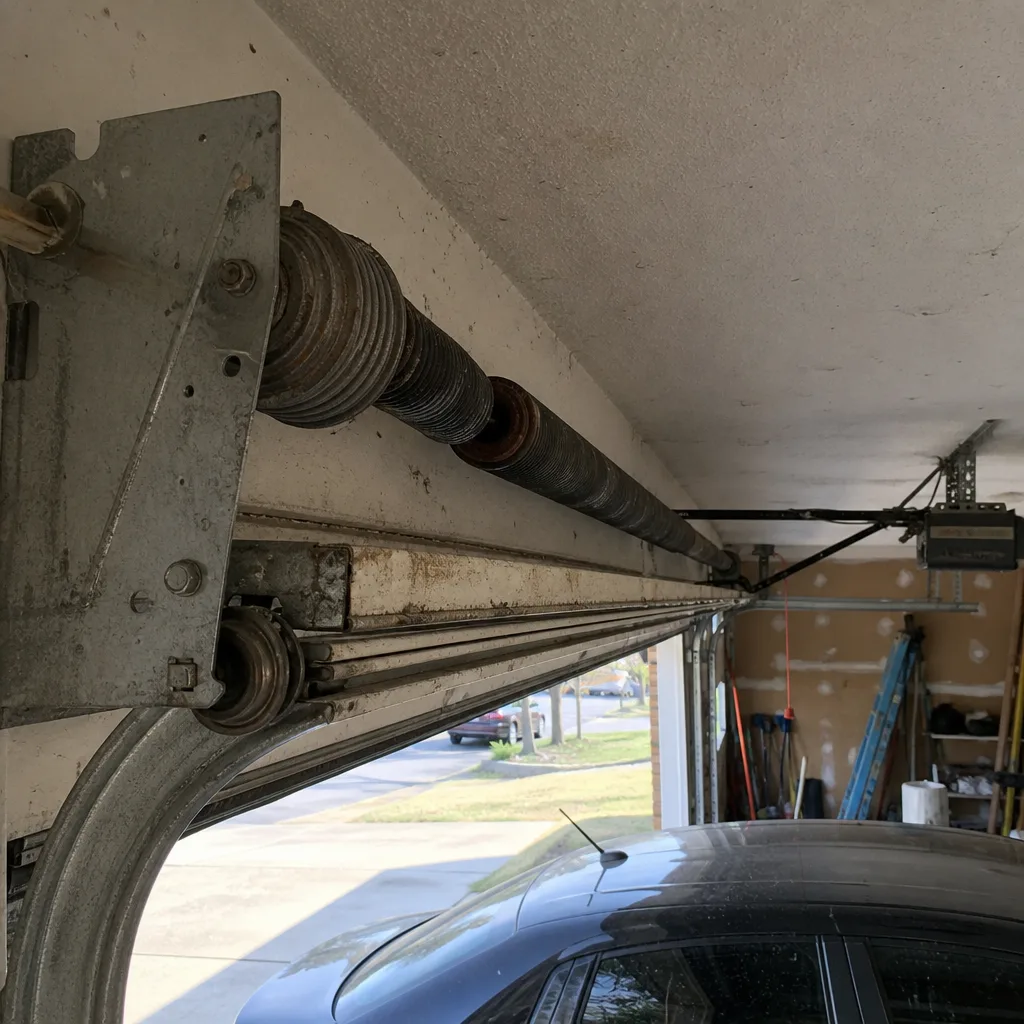
- Spring and cable safety: Extension springs must have safety cables running through the center to contain broken spring fragments. Torsion springs must be properly wound and anchored to a solid header mount. This is non-negotiable and a common failure point in DIY installations.
- Photo-eye alignment and function: All automatic garage door openers installed after 1993 must have photoelectric sensors no higher than six inches above the floor, aligned to reverse the door when the beam is interrupted. Inspectors test this with a standard 2×4 block or their foot.
- Force setting and auto-reverse: The opener’s down-force must be set to reverse on contact with a rigid object. Inspectors test this; excessive force that could injure a child causes immediate failure.
- Emergency release: The manual release handle must be red, clearly visible, and functional. It must disconnect the door from the opener for manual operation during power failure.
- Structural opening integrity: The inspector examines the header, jambs, and surrounding framing for rot, termite damage, or modification that compromises load-bearing capacity. In Grand Prairie’s humid subtropical climate, wood rot around garage openings is common in homes with poor drainage or inadequate roof overhangs.
How to Pass on the First Visit
- Have the manufacturer’s installation instructions on site, open to the page showing wind-load compliance and fastener specifications.
- Verify the permit card is posted before the inspector arrives. In Grand Prairie, inspectors will not enter the property without visible permit documentation.
- Test the photo-eye and auto-reverse yourself the morning of inspection. Clean the lenses; dust and spider webs common in Texas garages cause false failures.
- Ensure the area around the door is clear. Inspectors need access to both sides of the opening, the full track length, and the opener motor unit.
- If your home is in Grand Prairie’s floodplain (portions of the Fish Creek and Mountain Creek watersheds), have elevation documentation ready. The inspector may verify that the garage floor meets base flood elevation requirements.
We complete 94% of our Grand Prairie installations with first-pass inspections. The 6% that require re-inspection typically involve pre-existing conditions we discovered during installation, rotted framing or outdated electrical, that we document and correct with the homeowner’s approval before calling the inspector back.
Permits, Inspections, and Your Homeowner’s Insurance
This is where the opening hook becomes personal. Your homeowner’s insurance policy contains a clause you have likely never read: the “code compliance” or “law and ordinance” condition. It states that the insurer’s obligation to pay for damage may be reduced or voided if the damage resulted from work performed without required permits or in violation of building codes.
Consider the scenario: a severe thunderstorm rolls through Grand Prairie with straight-line winds of 85 mph. Your garage door, installed two years ago without a permit, blows inward. The door damages your vehicle, the garage interior, and potentially the living space above if you have a bonus room. You file a claim. The adjuster asks for permit and inspection documentation. You have none.
The insurer’s position: the door was not proven to meet the 90 mph wind-load standard required by IRC and local code. The installation was not inspected for proper track anchorage or safety systems. The absence of permit documentation creates reasonable doubt about code compliance. Your claim is denied or reduced by the cost of bringing the door to code, which may exceed the damage itself.
This is not theoretical. We have been called to document installations for insurance disputes in Grand Prairie, Arlington, and Irving. In every case where the homeowner could not produce a permit and final inspection, the insurer had grounds to limit coverage.
Some policies include “law and ordinance” coverage as a rider, but this covers the additional cost to rebuild to current code after a covered loss. It does not retroactively validate unpermitted work. The only protection is proper permitting and inspection at the time of installation.
Grand Prairie’s position in Tornado Alley makes this particularly relevant. The city experiences an average of 3-4 significant hail events annually and periodic severe thunderstorm warnings. A garage door is the largest moving structural element on most homes and the most vulnerable to wind pressure. Insurance carriers know this and scrutinize garage door claims closely.
Grand Prairie Code Requirements: What Makes Them Different
Grand Prairie occupies a unique position in the Dallas-Fort Worth permit landscape. The city straddles Tarrant, Dallas, and Ellis counties, with development patterns spanning decades and multiple building code cycles. This creates specific conditions that affect garage door work.
Wind exposure and soil conditions: Grand Prairie’s western and southern areas, toward Joe Pool Lake and the Tarrant-Ellis county line, have more open terrain than the older neighborhoods near downtown. This can bump exposure category from B to C, increasing wind-load pressure requirements for the same 90 mph base wind speed. We calculate this on every installation using the site’s specific exposure; a door adequate for a sheltered lot in Dalworth Park may be insufficient for an exposed property near Lake Ridge Parkway.
Age of housing stock: Grand Prairie’s building boom periods, 1960s-1970s and 1980s-1990s, produced thousands of homes with garage doors that predate modern wind-load standards. The International Conference of Building Officials did not introduce widespread wind-load requirements for garage doors until the 1990s. Many Grand Prairie homes have original doors with no wind-load rating at all. Replacement of these doors cannot be “like-for-like” because there is no comparable rating to match. A permit with full code-compliance documentation is mandatory.
Foundation and framing variability: Grand Prairie’s expansive clay soils cause foundation movement that affects garage door alignment and rough opening squareness. We regularly encounter openings that have shifted out of plumb, particularly in the Mira Lagos and Westchester subdivisions. A permit application that does not account for this may fail inspection if the door installation does not include jamb modification or header reinforcement to compensate. Our repair work in Grand Prairie often begins with assessing whether foundation movement has compromised the structural opening.
Electrical service to openers: Grand Prairie requires licensed electrician permits for any new electrical circuit to a garage door opener, or for replacement of existing wiring that does not meet current NEC standards. This includes GFCI protection for all garage receptacles, a requirement that surprises homeowners replacing 1980s-era openers hardwired without GFCI.
Historic district considerations: While Grand Prairie does not have the extensive historic overlay districts of Dallas or Fort Worth, the original townsite near Main Street and some early 20th-century properties have design review requirements. Garage door replacement in these areas may require architectural compatibility review in addition to standard building permits.
Permit Costs and Timeline Expectations
Permit costs vary by municipality and project valuation. Here are current ranges for North Texas garage door permits based on our 2024-2025 permit activity:
| City | New Installation Permit | Replacement Permit (if required) | Electrical Permit (opener) | Typical Timeline |
|---|---|---|---|---|
| Grand Prairie | $85-$150 | $50-$85 | $50-$75 | 2-5 business days |
| Arlington | $100-$175 | $75-$125 | $60-$85 | 3-7 business days |
| Irving | $90-$160 | $60-$100 | $55-$80 | 2-5 business days |
| Dallas | $120-$200 | $85-$150 | $70-$100 | 5-10 business days |
| Fort Worth | $95-$165 | $65-$110 | $55-$85 | 3-7 business days |
| Unincorporated Tarrant County | No municipal permit | No municipal permit | No municipal permit | N/A |
These are permit fees only, not contractor charges. Some contractors markup permit services; we do not. Mainspring includes permit pulling and inspection scheduling in our standard installation pricing for Grand Prairie. You see the permit fee as a line item on your invoice at exact city cost, with no administrative surcharge.
Timeline factors that extend permit issuance:
- Incomplete applications missing manufacturer’s documentation. We prevent this by submitting complete packages.
- Property liens or unresolved code violations on record with the city. These must be cleared before new permits issue.
- Homeowner association architectural review in addition to city permit. Some Grand Prairie subdivisions, particularly newer planned communities, require HOA approval before city permit submission.
- Plan review requirements for structural modifications. If your installation requires header replacement or opening enlargement, Grand Prairie may require engineering review, adding 1-2 weeks.
Inspection scheduling after permit issuance typically takes 1-3 business days in Grand Prairie. Same-day inspections are occasionally available for an additional fee if the city has inspector availability. We schedule inspections automatically when installation is complete; you do not need to call yourself.
Common Mistakes to Avoid
- Assuming replacement never needs a permit. In Grand Prairie, replacements that upgrade wind-load rating or change door dimensions require permits. Verify with the city before work begins, not after.
- Buying a door based on price alone without checking wind-load rating. Discount doors sold through online marketplaces often lack IRC compliance labeling. The inspector will reject them regardless of installation quality.
- Letting a contractor start work before permit issuance. Work begun before permit approval is subject to stop-work orders and double fees in Grand Prairie. The permit card must be posted before the first tool touches the project.
- Failing to separate electrical permits from building permits. Garage door opener electrical work requires its own permit in most Texas cities. A building permit for the door does not cover electrical inspection of the opener circuit.
- Ignoring foundation movement before installation. Grand Prairie’s clay soils shift. Installing a precision-fit door on a twisted frame guarantees callback and possible inspection failure. Address foundation-related framing issues first.
- Not requesting final inspection documentation. Some contractors finish work, collect payment, and never call for inspection. You are left without proof of code compliance. Insist on receiving the approved inspection report.
- Assuming unincorporated areas have no requirements. While Tarrant County does not issue garage door permits outside city limits, IRC compliance still applies. Insurance claims and home sales can still demand documentation of proper installation.
When to Call a Professional
Pulling permits, reading wind-load charts, and coordinating inspections is not most homeowners’ idea of a Saturday well spent. Browse our more guides & resources to simplify every stage of garage door ownership. The work demands attention to detail that comes from daily practice. You should call a professional when the project involves structural modification, electrical work, or any uncertainty about code requirements.
Specific scenarios where professional involvement protects you: replacement of pre-2000 doors with unknown wind-load ratings, installations in Grand Prairie’s floodplain or exposure-C wind zones, opener replacement requiring new electrical circuits, and any door failing to operate properly after storm damage where insurance documentation may be needed.
Mainspring Garage Door Co. offers free estimates in Grand Prairie. We assess your existing door, determine permit requirements, and provide a written quote with no obligation. Our trucks carry Wayne Dalton, Amarr, and other major brands with full IRC documentation. Most installations are completed in a single visit, and we handle every permit and inspection detail. Call (972) 645-4416 to schedule.
Frequently Asked Questions
You need a permit if the replacement changes the door dimensions, wind-load rating, or door type, or if structural modification is required. A true like-for-like replacement of the same size and equal or greater wind-load rating may be exempt, but you must verify this with Grand Prairie Building Inspections before work begins. Call (972) 645-4416 and we will confirm your specific situation at no charge.
Grand Prairie charges $85 to $150 for a new installation permit and $50 to $85 for a replacement permit when one is required. Electrical permits for opener work run $50 to $75. These are city fees only; Mainspring does not add administrative charges for permit handling.
The 2021 International Residential Code requires a minimum 90 mph wind-load rating for garage doors in the Dallas-Fort Worth area, including Grand Prairie. This applies to the complete door assembly: slab, track, hardware, and fasteners. Doors rated below 90 mph do not meet current code and may affect insurance coverage.
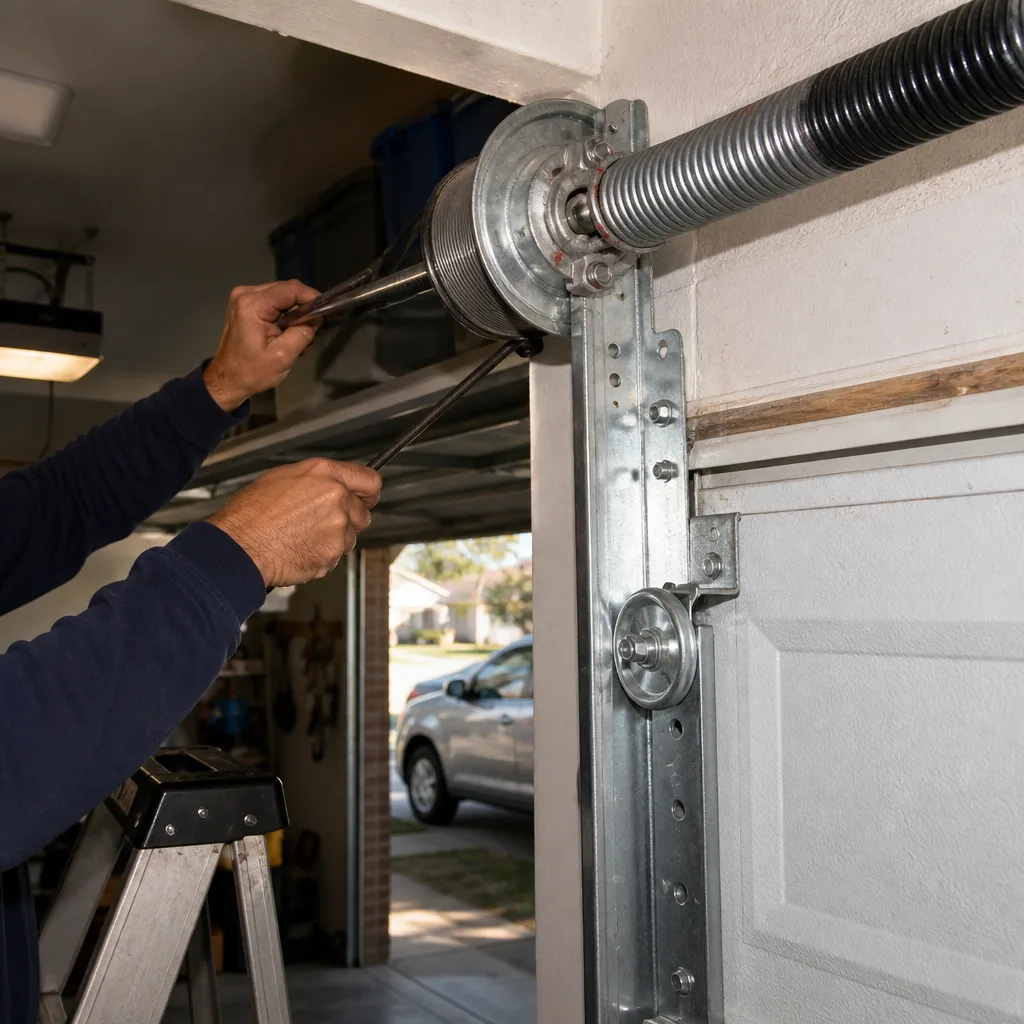
Yes, most Texas cities allow homeowners to pull permits for work on their primary residence. However, you assume full liability for code compliance and inspection passage. Garage door springs are under extreme tension and can cause serious injury or death if handled improperly. For safety and accountability, we recommend professional installation for all spring and cable work.
The inspector issues a correction notice listing specific deficiencies. You or your contractor must correct the items and schedule a re-inspection, typically at no additional fee if corrected within the city’s specified timeframe. In Grand Prairie, re-inspections are free if scheduled within 10 business days of the original inspection. Mainspring corrects any inspection issue at our cost when we perform the installation.
Possibly not. Most homeowner’s policies contain code compliance conditions that allow insurers to deny or reduce claims for damage caused by work performed without required permits or below code standards. The absence of permit and inspection documentation creates grounds for dispute. Proper permitting at installation time is the only reliable protection.
The Bottom Line
Garage door permits in Texas are a local matter with real financial consequences. Grand Prairie requires permits for new installations and many replacements, with specific documentation of 90 mph wind-load compliance. The “like-for-like” exemption applies only when size, type, and rating match exactly, and many older Grand Prairie homes have doors that predate modern standards entirely. Homeowner’s insurance claims can be denied for unpermitted work. The safest path is to verify requirements with your city, use a contractor who handles permits as standard practice, and retain final inspection documentation. The small upfront cost of proper permitting prevents the large downstream cost of failed inspections, uncovered claims, and rework.
Written by Carl Dutton, Owner at Mainspring Garage Door Co., serving Grand Prairie since 2016.